
Rupiah Weakens, Economic Pressure on Society Intensifies
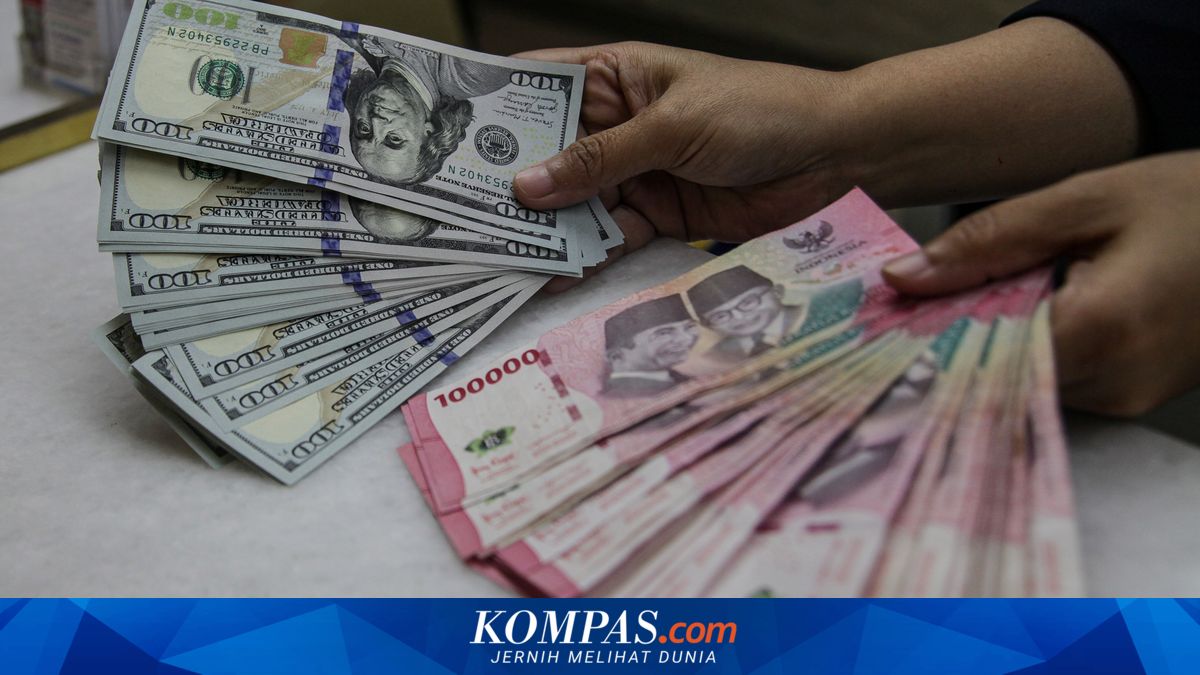
PADANG, KOMPAS.com - The weakening of the rupiah exchange rate approaching Rp17,300 per US dollar in late April to early May 2026 is seen as a serious signal for Indonesia’s economic resilience. This situation is said not only to pressure the domestic financial markets but also to potentially amplify the economic pressures felt by the public amid rising energy costs and the government’s limited fiscal room. “Late April to early May 2026 is a moment that cannot be ignored. The rupiah weakened sharply to around Rp17,000–Rp17,300 per US dollar, while the JCI experienced a significant correction in a short time,” said Economist from Andalas University Hefrizal Handra on his social media account, which has been confirmed by Kompas.com, on Thursday (7/5/2026). In the same period, foreign investors also carried out large-scale net selling in the domestic financial markets. This condition raises the question of whether Indonesia is facing a test of economic resilience or heading towards the early phase of a crisis. He assessed that this pressure cannot be separated from the prolonged strengthening of the US dollar, uncertainty in the direction of global interest rates, and increasing international geopolitical tensions. In addition, the surge in global oil prices breaking through US$100 per barrel further worsens the pressure on Indonesia, which still relies on energy imports. “The current global pressures are no longer temporary but tend to be persistent,” he said. “This is what makes the pressure on domestic financial markets last longer,” Hefrizal continued. Based on the purchasing power parity (PPP) approach with the basis of inflation in Indonesia and the United States since 2022, the rupiah exchange rate should be around Rp15,000 per US dollar. However, the actual rate around Rp17,200 per US dollar shows that the rupiah is about 14–15 per cent below its fair value. In economic theory, this condition is known as overshooting, namely when the exchange rate moves beyond the fundamental level due to excessive market response to short-term risks. “This means the rupiah is not only weakening but also trading below its fair value,” he said. “Sentiment and capital flows are more dominant than changes in economic fundamentals,” Hefrizal continued. Indonesia’s economic growth in the first quarter of 2026 at 5.61 per cent is deemed not yet fully able to increase market confidence in the domestic economic conditions. This is evident from the rupiah’s weakening that briefly breached Rp17,400 per US dollar in trading on Monday (4/5/2026). Director of the Digital Economy at the Center of Economic and Law Studies (Celios) Nailul Huda assessed that there are several anomalies in the first quarter 2026 economic growth data released by the Central Statistics Agency (BPS). “The negative movement of the rupiah (weakening) shows that our economic growth is fragile and not trusted by investors,” Nailul told Kompas.com on Thursday (7/5/2026). According to him, if the economic growth is truly solid as reflected in the BPS data, this should be followed by a strengthening rupiah and increased inflow of foreign capital into Indonesia. “Last year, when (the economy) was reported to rise sharply in the second and fourth quarters, it was considered not to reflect the rise in Indonesia’s economy,” he said. “So even though the first quarter of 2026 rose to 5.61 per cent, investors look at other indicators before investing,” Nailul continued. He added that both domestic and foreign investors now tend to take safe steps amid global and domestic economic uncertainty. This is evident from the increasing tendency of domestic investors to convert rupiah to US dollars. According to Nailul, Bank Indonesia’s (BI) policy of limiting foreign currency purchase transactions without underlying also indicates rising demand for US dollars. “This is what causes the demand for dollars to increase, making the rupiah weaken further,” he said.