
Rupiah Weakens: Don't Misread the Economic Signals
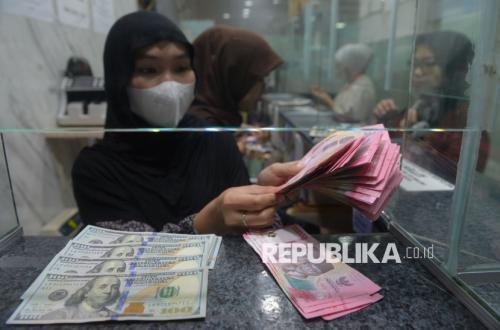
Every time the rupiah weakens against the US dollar, public discourse is quickly filled with anxiety. Some immediately interpret the rupiah’s depreciation as a sign of national economic fragility. Others view it as a policy failure. Yet, in an open economy, exchange rates never move due to a single cause alone.
The rupiah’s weakening is an economic signal, but it must be read accurately. Misreading exchange rate signals can lead to two equally misguided responses. On one hand, excessive panic can worsen market expectations. On the other, an overly calm attitude may cause us to ignore risks. Therefore, the rupiah’s weakening needs to be read with a cool head: alert but not panicked, critical yet optimistic; and most importantly, data-based.
At present, the main signal to read is the increasing global pressure. In the Academic and Researcher Dialogue Forum with Bank Indonesia Research Institutions on 11-12 May 2026, data showed that the world economy is facing significant pressures. The war in the Middle East worsens global prospects by driving up oil prices, increasing concerns over economic slowdown, and heightening stagflation risks. The world economic growth outlook for 2026 is projected to slow to 3.0 per cent from the previous forecast of 3.1 per cent. At the same time, global inflation is expected to rise to 4.2 per cent from 4.1 per cent previously. Brent oil prices are even said to rise to around $106 per barrel due to the Middle East war and disruptions in the Strait of Hormuz.
This data is important because it explains that the rupiah’s weakening cannot be read as a standalone phenomenon. When oil prices rise, geopolitical conflicts worsen, and global uncertainty increases, global investors tend to shift their funds to safe-haven assets. In such situations, the US dollar strengthens, US Treasury yields rise, and currencies of emerging markets come under pressure.
Bank Indonesia data also indicates that US interest rate cuts are expected to slow or even persist until the end of 2026. Global capital flows continue to shift to safe-haven assets, particularly the US money market. US Treasury yields are rising amid concerns over a larger US fiscal deficit, while the US dollar index or DXY continues to strengthen. All these factors pressure emerging markets, including Indonesia.
Meanwhile, recent research findings reinforce this reading. Du and Verma’s article “Dynamics of Capital Flows and Global Factors: Case of Emerging Economies,” published in the Journal of Quantitative Economics in 2024, shows that capital flows in emerging economies are heavily influenced by global factors, including international financial conditions and risk sentiment. However, the study also confirms that a country’s sensitivity to global pressures is influenced by domestic factors, such as trade openness, financial interconnectedness, macro-financial stability, and exchange rate flexibility. In other words, while pressures on the rupiah are largely driven by global factors, its resilience is still very much determined by domestic strengths.
Thus, the first signal to read is the global signal. The rupiah’s weakening is not because Indonesia is facing pressure alone. Many emerging market currencies are experiencing similar pressures due to shifts in global capital directions. In the framework of the global financial cycle, emerging economies are indeed vulnerable to changes in global sentiment, especially when the US dollar strengthens and investors opt for safe assets.
However, reading global signals alone is not enough; the second signal to read is the domestic resilience signal. Amid these global pressures, Indonesia’s macroeconomic conditions still show resilience. Bank Indonesia notes that rupiah volatility remains controlled and is among the lowest compared to peer countries. In fact, the rupiah’s weakening is still better than some other emerging market currencies, such as the Indian rupee and Turkish lira.
This indicates that the rupiah is indeed under pressure but is not moving in an uncontrolled manner. Exchange rate pressures can still be managed through measured policy mixes. In other words, the rupiah’s weakening is a vigilance signal, not a crisis signal.
Bank Indonesia’s response also shows that the monetary authority is not relying on a single instrument. BI is implementing an exchange rate stabilisation strategy through interventions in the offshore market using NDF instruments, as well as in the domestic market through spot transactions and Domestic Non-Deliverable Forward. This strategy is reinforced by managing foreign exchange supply-demand, communication and coordination with market players and stakeholders, and monitoring rupiah movements in offshore markets around the clock and globally.
These steps are important because pressures on the rupiah are not formed solely in the domestic market. Expectations for the rupiah can also be influenced by transactions in global markets, foreign investor sentiment, offshore positions, and perceptions of emerging market risks. Therefore, BI needs to be present not only in the domestic market but also to read offshore dynamics.
In addition to maintaining exchange rate stability, BI is also strengthening the attractiveness of domestic assets. One key instrument is Bank Indonesia Rupiah Securities or SRBI. BI data shows that inflows into SRBI have reached around Rp92 trillion year-to-date, which supports rupiah stability. Indonesia’s yield spread, particularly for government bonds against US Treasuries, has also widened from 189 basis points in 2025 to 222 basis points on 6 May 2026.
This data shows that BI is not only trying to hold back the rupiah’s weakening.