
Rupiah Weakens by 0.17% as US Dollar Rises to Rp17,530
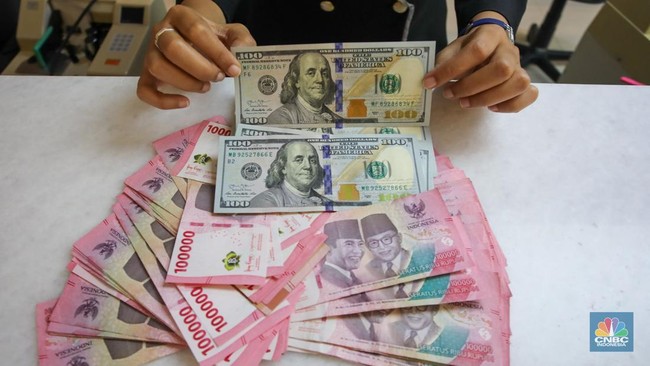
The rupiah exchange rate reversed its trend to weaken against the US dollar at the close of today’s trading.
Refinitiv data shows the rupiah depreciated by 0.17%, closing Thursday (10/09/2026) at Rp17,530/US.ThismarksareversalfromitsopeningpositionofRp17, 495/US, which was a slight gain of 0.03%.
This weakness reverses the sharp appreciation seen during previous trading on Wednesday (09/09/2026), when the rupiah closed up 0.71% at the Rp17,500/US$ level. Despite this correction, the rupiah remains near its strongest position in almost 17 weeks.
Meanwhile, the US Dollar Index (DXY), which measures the greenback’s strength against six major world currencies, was observed to have weakened by 0.10% to 98.721 as of 15:00 WIB.
The rupiah’s movement today occurred amidst rising oil prices and US government bond yields. Brent crude oil prices remained above US$100 per barrel after breaching that level during Wednesday’s trading. The increase occurred as Iran and the US launched the largest wave of attacks against shipping lanes in the Strait of Hormuz since the conflict began.
This conflict has heightened concerns regarding energy supply disruptions from the Middle East. The rise in energy prices has also stoked inflation fears, causing global bond yields to rise again. The 10-year US Treasury yield even touched its highest level since 2023.
While rising yields can increase the attractiveness of dollar-denominated assets and pressure emerging market currencies, these conditions have not yet been enough to lift the DXY, which returned to around the 98.7 level. The US dollar remains constrained by the strengthening Japanese yen, which is near its highest level in seven months, as markets anticipate the Bank of Japan (BOJ) will raise interest rates next week.
Market participants are also awaiting US producer inflation data released on Thursday and consumer inflation on Friday. Both are the final key data sets before the US Federal Reserve holds its meeting on 15-16 September. Currently, market participants are pricing in approximately a 60% chance that the Fed will raise interest rates this month, following stronger-than-expected US labour reports last week.
In response to the rise in global oil prices, Finance Minister Purbaya Yudhi Sadewa emphasised that the State Budget (APBN) is still capable of absorbing the impact of world oil prices rising up to approximately US$100 per barrel.
“The budget is still sufficient, as we previously calculated,” said Purbaya when met in Jakarta on Thursday (10/09/2026). According to Purbaya, the government has no plans to increase energy subsidy quotas yet but will continue to monitor global oil price developments. The government’s fiscal calculations, assuming a state budget deficit of 2.85% of Gross Domestic Product (GDP), have accounted for the possibility of oil prices hovering around US$100 per barrel.