
Rupiah Weakens, Businesspeople Urged to Use This BI Facility for Imports
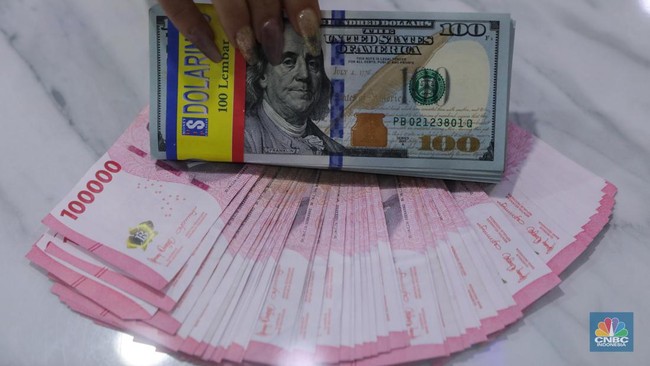
Jakarta, CNBC Indonesia - The weakening of the rupiah exchange rate is beginning to spark concerns among domestic industrial players. The Ministry of Industry (Kemenperin) views this situation as a serious challenge, particularly for industries still dependent on imported raw materials.
Based on Refinitiv data, the Garuda currency closed trading at Rp16,990/US, oraslightweakeningof0.03, this position marks the weakest closing level for the rupiah in history.
In response to this pressure, Kemenperin’s spokesperson Febri Hendri Antoni Arief encouraged business actors to start reducing reliance on US dollar-based transactions.
“Indeed, there are challenges facing the industry, one of which is the rupiah’s appreciation against the dollar. Regarding this, our appeal is for industries to use the LCT facility, Local Currency Transaction from Bank Indonesia, when importing industrial raw materials from abroad,” he said at Kemenperin on Tuesday (31/3/2026).
As is known, Local Currency Transaction (LCT) is a bilateral transaction scheme between countries that uses each party’s local currency for payment settlement, without conversion to the US dollar (USD).
Kemenperin sees the utilisation of local currency transaction schemes as a strategic step to maintain production cost stability amid exchange rate volatility. This scheme is considered capable of cushioning the impact of fluctuations that have long burdened import-based industries.
“If using local currency, it’s not as affected compared to importing using the dollar,” he said.
On the other hand, the rupiah’s weakening also opens new opportunities for export-oriented industries. This momentum is seen as exploitable to increase the competitiveness of Indonesian products in the global market.
“And secondly, if there’s pressure on the exchange rate, export-oriented industries are actually attractive, right? Industries, please, this is the time, when the dollar rises against the rupiah, domestic industries that usually target the domestic market can seize this opportunity to improve their competitiveness against manufactured products from other countries, especially in the global market, and also the chance to flood the global supply chain with domestic industrial products,” he stated.
In addition to promoting export strategies, Kemenperin also reiterated the importance of collaboration in the national supply chain to be more adaptive to external pressures.
“Regarding raw materials, we convey and urge industries and all components in the national industrial supply chain ecosystem to use Bank Indonesia’s facility, Local Currency Transaction, namely the use of local currencies to anticipate exchange rate changes when importing raw materials,” he emphasised.
Learning from previous crises, the government is optimistic that the industrial sector has better resilience in facing current global pressures.
“We hope going forward, we are confident that the industry, based on experiences from previous crises and the COVID pandemic, already has good lessons learned to face various crises and strong challenges ahead,” he said.
Source: jawawa.id (https://jawawa.id/newsitem/rupiah-weakens-businesspeople-urged-to-use-this-bi-facility-for-imports-1774961847)
Originally published by CNBC Indonesia (https://www.cnbcindonesia.com/news/20260331175956-4-722906/rupiah-melemah-pengusaha-diminta-pakai-fasilitas-bi-ini-saat-impor), translated from Indonesian