
Rupiah Weakens at Market Open, US Dollar Rises to Rp16,940
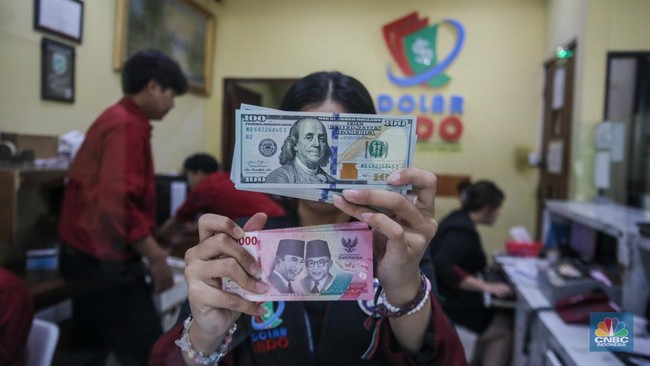
Jakarta — Entering the first trading session of the week on Monday, 16 March 2026, the Indonesian rupiah opened weakened against the United States dollar.
According to Refinitiv data, at the morning market opening, the rupiah corrected slightly by 0.03% to reach Rp16,940/US.ThisdepreciationcontinuesthepressurethathadalreadyoccurredintheprevioustradingsessiononFriday, 13March2026, whentherupiahclosedweakerbyapproximately0.30.
Meanwhile, the US dollar index (DXY) at 09.00 WIB was tracking in negative territory, declining 0.10% to 100,258. However, at the close of the previous trading session, DXY had recorded a substantial gain of 0.62% to 100,362.
The rupiah’s movement in the first trading session of this week remains heavily influenced by external sentiment, particularly the strength of the US dollar in global markets.
Throughout the previous week, the US dollar recorded its best weekly gains since September 2024, with an appreciation of approximately 1.7%. This strengthening occurred alongside increased demand for safe-haven assets amid the conflict in the Middle East and elevated energy prices.
Market participants continue to monitor the risks of conflict escalation, particularly regarding the possibility of disruptions to global energy trading routes. Market concerns have intensified with reports of attacks on vessels in the region and potential disruptions to the Strait of Hormuz, which is one of the world’s vital oil distribution corridors.
Entering the third week of the conflict, the market has not observed many signs of easing tensions. Concerns have instead increased as the conflict is assessed to have the potential to escalate further and prove difficult to control.
At the same time, efforts by several US allies in the Middle East to promote diplomatic channels have reportedly not received a positive response from President Donald Trump’s administration. This situation has also added to uncertainty in global financial markets.
The strengthening of the US dollar, reflected in the movement of the dollar index against six major global currencies, demonstrates that investors are still pursuing the greenback. This situation ultimately narrows the scope for appreciation of other currencies, including the rupiah.