
Rupiah Weakens as Markets Await Certainty on US-Iran Ceasefire
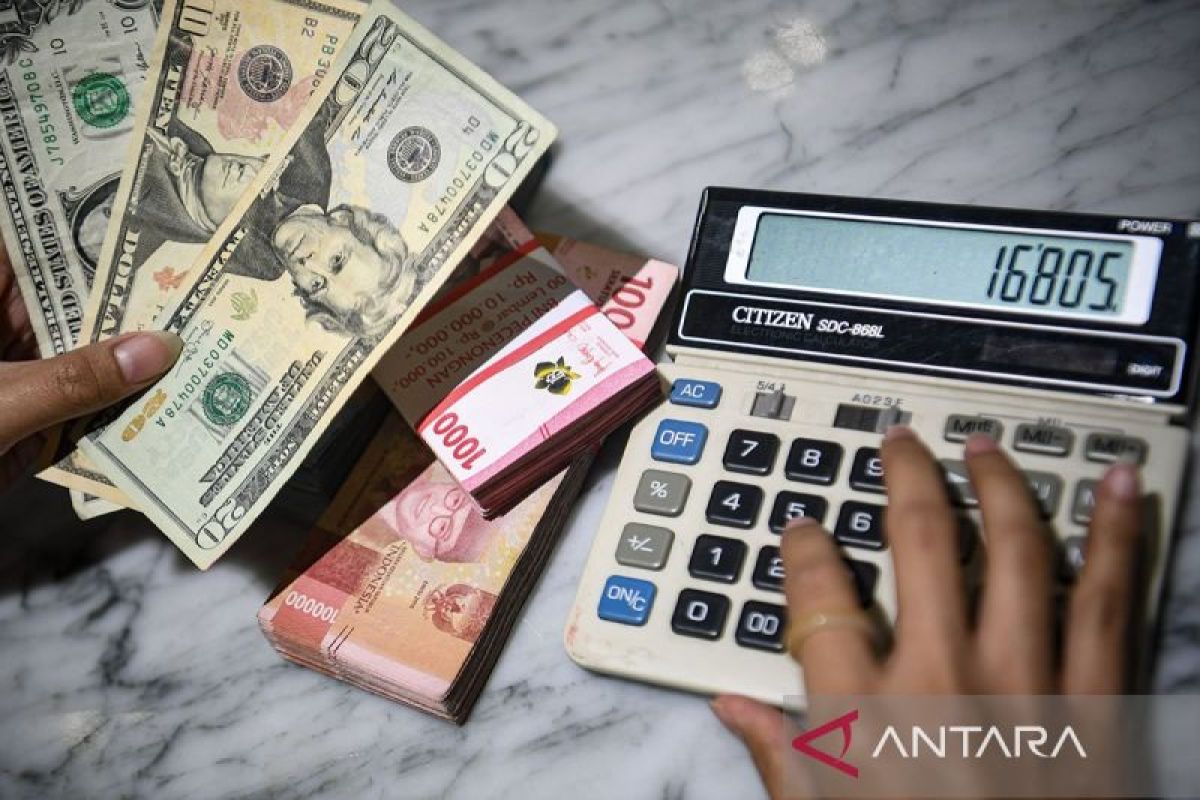
Jakarta (ANTARA) - The rupiah exchange rate closed lower on Thursday’s trading by 78 points or 0.46 percent to Rp17,090 per US dollar from the previous close at Rp17,012 per US dollar. Tiffani Safinia from the Research & Development of the Indonesia Commodity and Derivatives Exchange (ICDX) assessed that the rupiah’s weakening was triggered by the market’s wait-and-see attitude regarding the certainty of the US-Iran ceasefire agreement. “The market is still awaiting certainty on the implementation of that agreement, including the opening of strategic global energy routes,” she told ANTARA in Jakarta on Thursday. Citing Anadolu, the US had previously accepted a 10-point proposal as a workable basis for negotiations aimed at ending the war. Citing related statements and reports, the Islamic Republic of Iran Broadcasting (IRIB) stated that the proposal includes guarantees of no aggression against Iran, continuation of Iran’s control over the Strait of Hormuz, recognition of Tehran’s right to uranium enrichment, and the lifting of all major and secondary US sanctions. Additionally, it includes stopping UN Security Council resolutions and those of the International Atomic Energy Agency’s Board of Governors against Iran, payment of compensation, withdrawal of US combat forces from the region, and cessation of hostilities on all fronts, including in Lebanon. Iran’s Supreme National Security Council (SNSC) emphasised that the talks do not mean the war has ended and stressed that any final agreement depends on the fulfilment of Iran’s conditions and detailed resolution. Safe passage through the Strait of Hormuz will also be guaranteed during the negotiation period through coordination with Iran’s armed forces. However, Zionist Israel violated the ceasefire agreement by launching massive airstrikes in the Dahiyeh area south of Beirut, Lebanon. The Israeli military had previously stated it attacked more than 100 locations in 10 minutes in Beirut, the Beqaa Valley, and southern Lebanon, with a total of 254 fatalities. Moreover, as reported by Sputnik, US Vice President JD Vance said on Wednesday (8/4) that the cessation of hostilities in Lebanon is not part of the US-Iran ceasefire agreement and described the issue as a “misunderstanding”. US President Donald Trump had previously stated that stopping the conflict in Lebanon is not included in the agreement due to Hezbollah’s involvement. Trump viewed the situation in that country as part of a “separate clash.” “Although there is positive progress in the form of a two-week ceasefire agreement between the US and Iran, the market views its impact as still temporary and not yet able to provide strong risk-on sentiment,” Tiffani explained. She emphasised that the main pressure comes from uncertainty in the West Asian region, particularly regarding the Strait of Hormuz, which has not fully returned to normal. This condition is seen as keeping oil prices high and increasing global inflation concerns, thereby strengthening the US dollar and pressuring the rupiah. “Meanwhile, from the domestic side, sentiment towards the rupiah remains somewhat limited. Several factors such as slowing export performance, pressure on foreign exchange reserves due to interventions, and concerns over fiscal and budget deficits are also holding back the rupiah’s strengthening,” she said. The Bank Indonesia Jakarta Interbank Spot Dollar Rate (JISDOR) today also moved lower to Rp17,082 per US dollar from the previous Rp17,009 per US dollar.