
Rupiah weakens as market awaits US inflation data
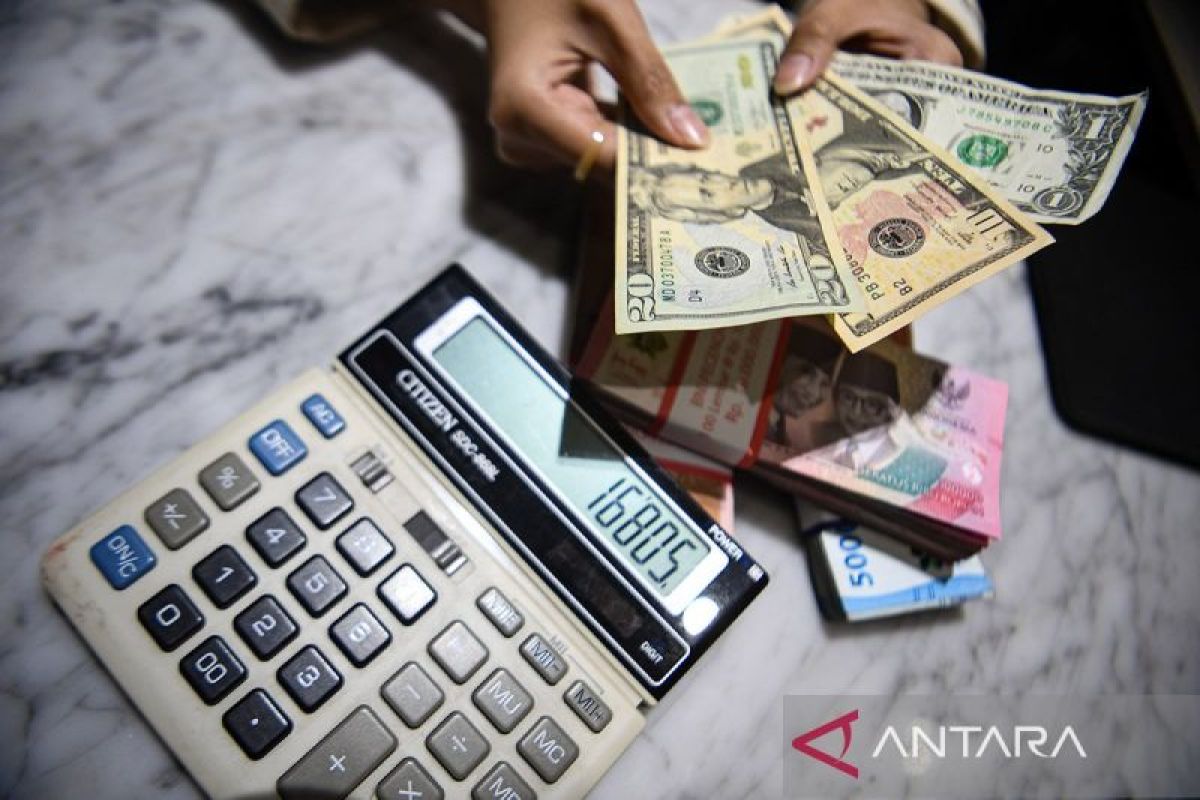
The rupiah exchange rate weakened by 6 points, or 0.03 percent, to Rp18,115 per US dollar on Tuesday morning, compared to the previous close of Rp18,109 per US dollar. Permata Bank Chief Economist Josua Pardede stated the rupiah weakened because the market is still waiting for US inflation data. “I estimate the rupiah will move in a limited range of Rp18,060–Rp18,170 per US dollar, with a midpoint around Rp18,100–Rp18,120 per US dollar. It usually tends to be limitedly weak, not because domestic sentiment is entirely poor, but because the market is still waiting for US inflation data and the statement from the US central bank chief on 14 July,” he said in Jakarta on Tuesday. If US inflation is lower than expected and the tone from the US central bank is not too hawkish, he continued, the rupiah has the opportunity to strengthen back to around Rp18,030–Rp18,080 per US dollar. However, if US core inflation remains high or the central bank’s statement sounds hawkish, the rupiah could test Rp18,180–Rp18,220 per US dollar. The market expects US June inflation to slow to 3.9 percent year-on-year, but core inflation is still holding at 2.9 percent. In addition, the market is also waiting for the statement from the US central bank chief on 14 July. “This is important because if core inflation remains stubborn, expectations of higher-for-longer US interest rates will strengthen, the US dollar will be back in demand, and the rupiah will be depressed again,” said the Permata Bank Chief Economist. Oil prices are also a significant pressure point, with Brent rising 3.43 percent daily to 78.6 US dollars per barrel and having risen 29.2 percent since the start of the year. Typically, rising oil prices are negative for the rupiah because Indonesia is still a net oil importer. If oil prices remain high, the market will calculate additional risks to energy imports, subsidies, inflation, the current account balance, and foreign exchange reserves. Looking at the domestic side, there is positive sentiment from S&P Global Ratings, which maintained Indonesia’s rating at BBB with a stable outlook. S&P assessed that Indonesia’s fiscal and external weakening is temporary and can still be supported by the recovery of state revenues, commodity exports, and the government’s commitment to keeping the deficit below 3 percent of Gross Domestic Product (GDP). However, S&P also highlighted that the rupiah has already weakened by about 7 percent in the first semester and that fiscal-external pressures still need to be managed. “So, S&P’s decision helps to hold back the pressure, but it is not yet strong enough to drive a massive rupiah strengthening,” Josua explained.