
Rupiah Weakens as Foreign Capital Outflows, Bank Indonesia Governor Explains Causes
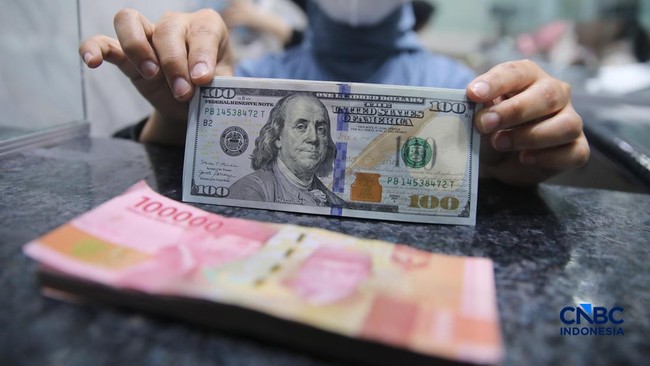
The Rupiah closed weaker against the US Dollar in Monday’s trading. According to Refinitiv data, the currency ended the session in the red, weakening by 1.03% to the level of Rp17,640/US.Consequently, theRupiahhasonceagainbreachedthepsychologicalthresholdaboveRp17, 000/US, marking its weakest closing position in history.
Bank Indonesia (BI) Governor Perry Warjiyo addressed the exchange rate depreciation, stating that the weakness observed since the beginning of the year is driven by both fundamental and technical factors. From a fundamental perspective, Perry believes the current exchange rate does not align with Indonesia’s economic conditions. “Based on our experience through various crises, we believe it is undervalued,” Perry stated during a working meeting with Commission XI of the Indonesian House of Representatives (DPR RI) on Monday.
Domestically, Perry noted that seasonal factors are also putting pressure on the Rupiah, specifically related to the Hajj pilgrimage, dividend payments, and corporate debt repayments.
Regarding technical factors, the depreciation is being driven by geopolitical tensions in the Middle East. The risks in the Middle East are substantial and have global implications. “This impact leads to declining global growth and soaring oil prices. Brent was at US$120 and is now at US$111. This mirrors previous periods,” he explained.
In tandem with this, high inflation in the US has led the Federal Reserve to pause reductions to the Fed Funds Rate (FFR). As a result, US Treasury yields have risen, triggering an asset shift from emerging markets (EM) to the US.
Despite the weakness, Perry noted that the movement of the Rupiah against the US Dollar remains stable so far. “We checked the year-to-date figures, and it stands at 5.4%, which is actually still stable,” said Perry. He emphasised that Bank Indonesia does not target a specific exchange rate level, but rather focuses on maintaining stability. “We are not talking about a specific level of the Rupiah exchange rate; we are talking about stability. What we are monitoring now is what we call stability, specifically the average 20-day exchange rate volatility,” he asserted.