
Rupiah Weakens, Approaches 18,000 per US Dollar Again
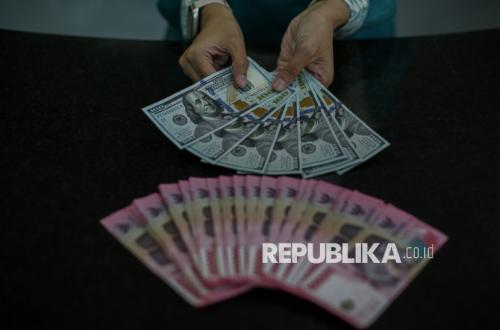
JAKARTA – The rupiah’s exchange rate against the US dollar has weakened and again approached the level of Rp 18,000 per US dollar. Analysts assess that the Garuda currency is under pressure, among other reasons, due to projections of slowing economic growth in the second quarter of 2026. In addition, the weakening has also been influenced by the United States’ decision to impose a new tariff of 10 percent on Indonesia.
Quoting Bloomberg, the rupiah weakened by 26.50 points, or 0.15 percent, to Rp 17,962.5 per US dollar at the close of trading on Friday (24/7/2026). In the previous trading session, the rupiah stood at Rp 17,936 per US dollar.
“(Domestic sentiment) The Government, through the Minister of Finance, estimates that the Indonesian economy will grow around 5.4 percent in the second quarter of 2026, slowing compared to the first quarter of 2026, which was 5.61 percent,” said Currency and Commodity Observer Ibrahim Assuaibi in his statement on Friday (24/7/2026).
Despite the slowing economic growth projection, the government is optimistic that growth will pick up in the second half, supported by maintained liquidity and the implementation of prudent fiscal policy. To sustain the momentum of Indonesia’s economic growth, the government will ensure that liquidity in the economic system remains adequate. Sufficient liquidity is an important factor in supporting business activity, investment and public consumption.
Another domestic sentiment is Indonesia’s trade balance data, which recorded a deficit for the first time in the past six years. Statistics Indonesia (BPS) recorded a trade deficit of US$1.61 billion in May 2026, after posting surpluses for 72 consecutive months since May 2020.
In May 2026, Indonesia’s export value was recorded at US$23.2 billion, down 5.73 percent year-on-year compared to the same period last year, mainly due to weakening non-oil and gas exports. Meanwhile, Indonesia’s import value reached US$24.81 billion, an increase of 22.16 percent year-on-year. The rise in imports was mainly driven by raw and auxiliary material imports, which reached US$17.58 billion, growing 25.17 percent year-on-year compared to May 2025. Capital goods imports were recorded at US$5 billion, up 12.7 percent year-on-year.
In addition, the rise in global crude oil prices has also contributed to pressure on the rupiah’s exchange rate. Crude oil prices are currently above the revised state budget (APBN-P) assumption of US$83 per barrel, meaning the government must strive to cover the risk of a deepening deficit.
“The increase due to the conflict in the Middle East has the potential to press on Indonesia’s external performance, from a widening current account deficit to pressure on the rupiah’s exchange rate in the third quarter of 2026,” said Ibrahim.