
Rupiah weakens amid expectations of prolonged higher US interest rates
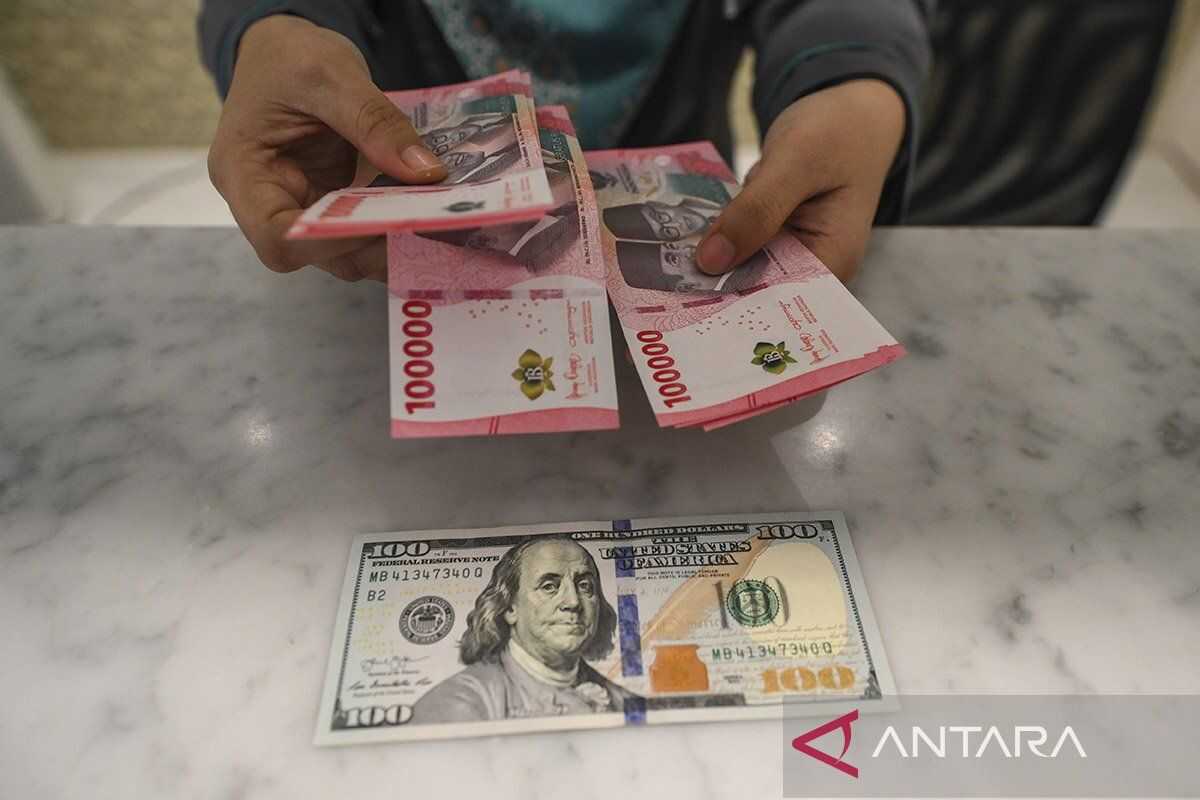
Jakarta (ANTARA) — The rupiah weakened by 9 points, or 0.05 per cent, to Rp16,903 per US dollar at the opening of trade in Jakarta on Friday, down from the previous level of Rp16,894 per US dollar.
Taufan Dimas Hareva, head of research and development at the Indonesia Commodity and Derivatives Exchange (ICDX), said the rupiah’s potential weakness was linked to expectations that US interest rates would remain higher for an extended period.
“The rupiah is expected to move in a relatively stable range with a limited weakening bias during today’s trading session at Rp16,800–Rp16,950 per US dollar. Pressure on the rupiah continues to stem from the strengthening of the US dollar in global markets, in line with expectations that United States interest rates will remain higher for longer,” he told ANTARA in Jakarta on Friday.
Nevertheless, he added, the depreciation was not expected to be particularly deep as domestic market participants were still closely monitoring the monetary authority’s stabilisation measures and Indonesia’s relatively sound economic fundamentals.
On the domestic side, the key drivers of sentiment include Bank Indonesia’s interest rate policy, inflation stability, and foreign capital flows in the bond and equity markets.
Corporate demand for foreign currency to meet import requirements and service external debt obligations was also seen as contributing to short-term pressure.
However, the trade surplus and Bank Indonesia’s commitment to maintaining exchange rate stability serve as factors restraining rupiah volatility and keeping it under control amid global dynamics.
Overall, market participants in the coming period are expected to closely watch the release of US economic data, such as inflation figures and employment indicators, which will influence the direction of Federal Reserve policy and US dollar movements.
Developments in US bond yields, global risk sentiment, and commodity price dynamics are also set to be important catalysts for rupiah movements.
“The combination of these external and domestic factors has the potential to keep the rupiah within a moderate fluctuation range, with movement bias still sensitive to the direction of the US dollar,” Taufan said.