
Rupiah Weakens Against US Dollar as Safe-Haven Sentiment Strengthens
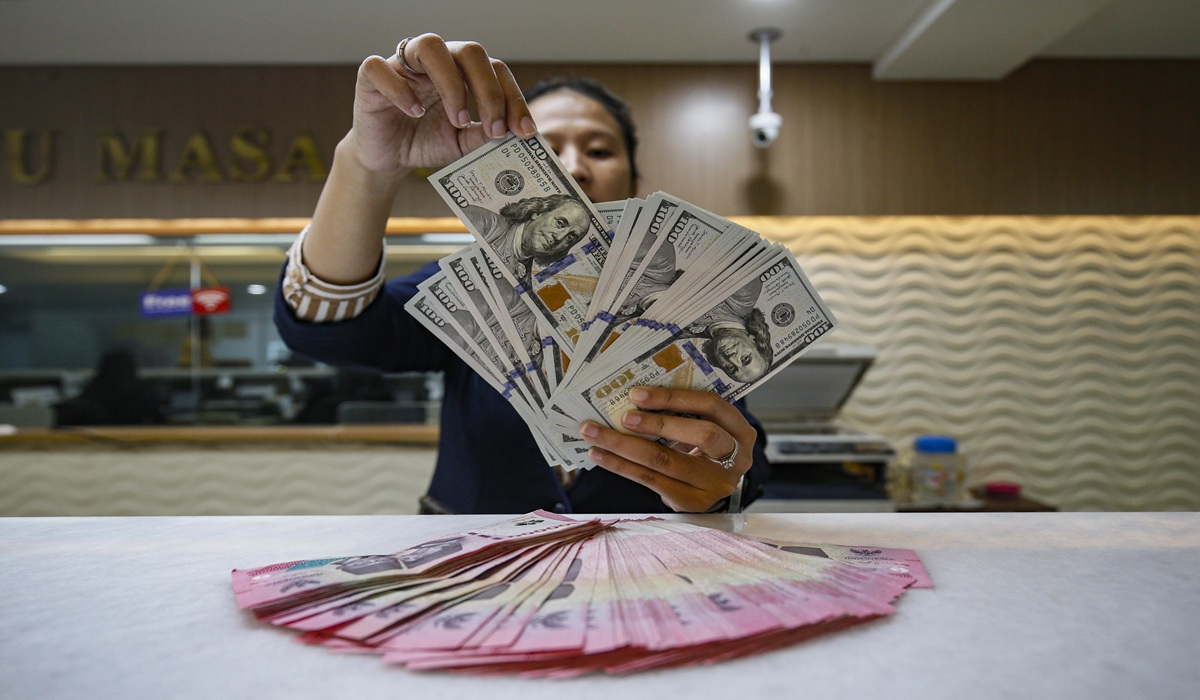
The Indonesian rupiah weakened against the US dollar in Tuesday (26 May) morning trading. Market data showed the currency fell 5 points, or 0.03%, to Rp17,749 per US dollar, compared to the previous close of Rp17,744. This prompted investors to shift assets to safer-haven instruments.
The rupiah’s weakness was driven by heightened global geopolitical uncertainty, particularly regarding escalating tensions and negotiations between the United States and Iran.
The US dollar’s strength was reflected in the Dollar Index (DXY), which rose to 99.10. Beyond Middle East geopolitical factors, markets also anticipate the Federal Reserve maintaining higher interest rates for longer due to persistent US inflation.
“Rising US government bond yields and heightened global market volatility have also pressured emerging market currencies, including the rupiah,” said Amru Syifa in Jakarta on Tuesday (26 May).
Domestically, pressure on the rupiah was exacerbated by weakening external sector resilience. Data showed Indonesia’s current account deficit widened significantly to $4.01 billion in Q1 2026, up sharply from $0.15 billion in the same period last year.
This widening deficit, combined with capital flight to safe-haven assets and challenging domestic fundamentals, has left the rupiah vulnerable this week.
Families of Indonesian Migrant Workers (PMIs) benefit from the stronger foreign currency against the rupiah.
A decision to raise the benchmark interest rate (BI Rate) by 50 basis points to 5.25% was made to stabilise the rupiah amid heightened global uncertainty.
NasDem Party Chairman Surya Paloh commented on President Prabowo Subianto’s target for the rupiah to trade between Rp16,800 and Rp17,500 per US dollar.
Finance Minister Purbaya Yudhi Sadewa stated that debt financing has reached 36.7% of the 2026 state budget ceiling, with the government assuring credible fiscal management.
Finance Minister Purbaya Yudhi Sadewa emphasised that Indonesia’s fiscal fundamentals remain sound with a debt-to-GDP ratio of 40% despite the rupiah’s weakness.