
Rupiah Weakens Again as MSCI Concerns and Oil Prices Weigh
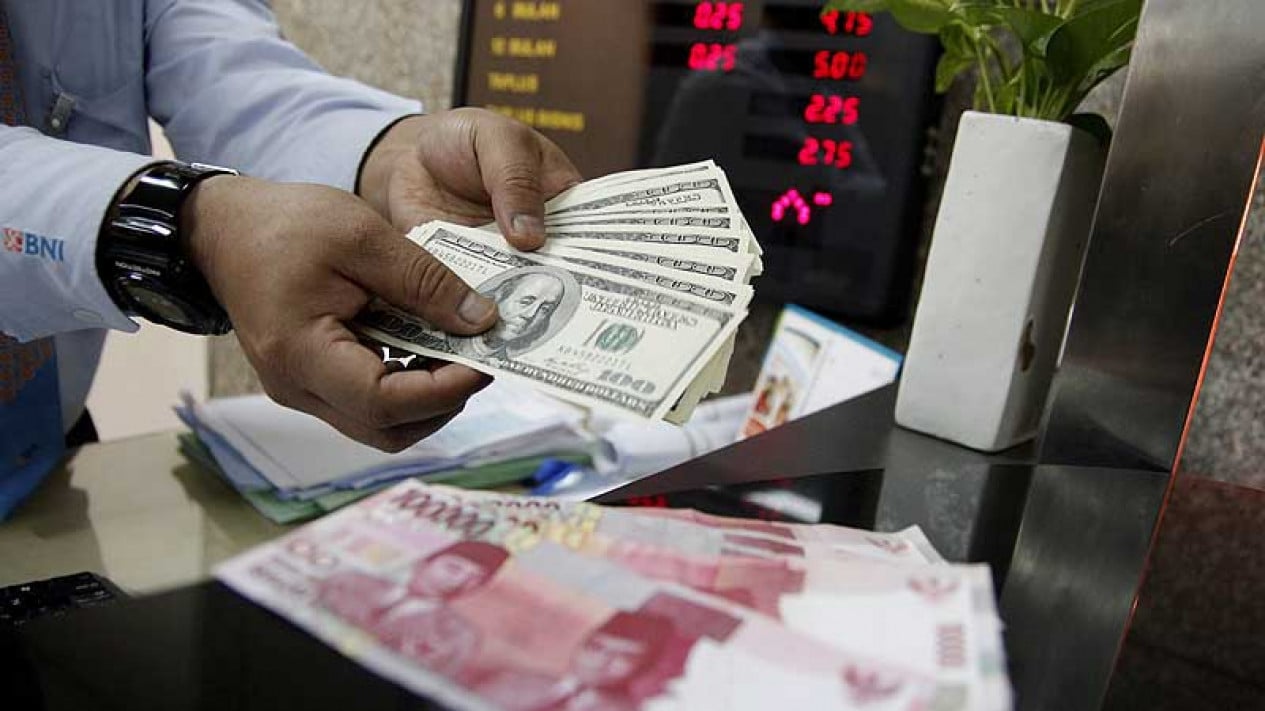
The rupiah weakened again against the US dollar in trading on Monday (19 October 2026). Pressure came from global uncertainty, inflation concerns and negative sentiment in the domestic financial market, prompting investors to avoid risk.
Ibrahim Assuaibi, director of PT Traze Andalan Futures and an observer of the economy, currencies and commodities, said the rupiah closed at Rp18,046 per US dollar. The Indonesian currency lost 19 points from its previous close of Rp18,027, having earlier fallen by as much as 30 points.
Externally, the US dollar index weakened on Monday. One development drawing market attention was US President Donald Trump’s decision to suspend several sanctions against Russia and cancel plans to impose tariffs on countries importing Russian oil.
Inflation risks nevertheless continued to weigh on global markets. Uncertainty over energy supplies from the Middle East, the lack of an agreement in US-Iran talks and rising tensions in the region were also being watched by investors.
Market participants were also considering the possibility that the US central bank, the Federal Reserve, could raise interest rates before the end of the year. However, there had been no strong signal about its decision at the 27–28 October meeting.
Markets are next awaiting US initial jobless claims and purchasing managers’ index (PMI) data for an indication of the country’s economic conditions.
Domestically, Ibrahim highlighted uncertainty surrounding a proposal by MSCI to reclassify Indonesia as a Standalone Market. The proposal is still under consideration and review, so it is not yet certain whether it will be implemented.
In addition, a surge in global oil prices, reported to have exceeded US$110 a barrel, has added to uncertainty in financial markets. This could make investors more cautious about taking risks.
Efforts by the exchange authorities to enforce rules against parties suspected of violations could also increase volatility in the short term. However, effective enforcement could strengthen the capital market’s credibility over the longer term.
The exchange also announced that the auto-rejection limit would be reduced from 15 per cent to 7 per cent, effective from Monday until the end of the year. The policy followed regulators’ imposition of administrative fines totalling Rp2.1 trillion on parties connected with trading and the initial public offerings of three major companies.