
Rupiah Weakening and the Test of Confidence
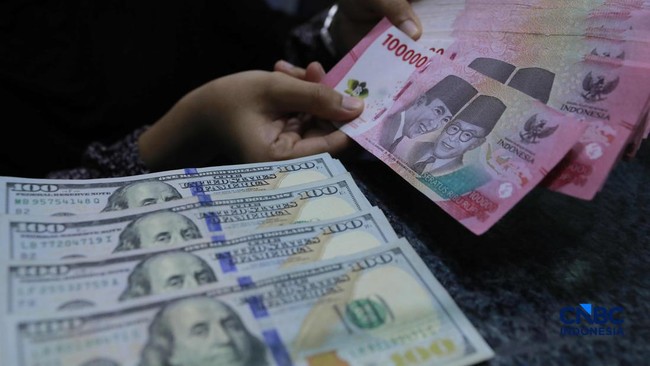
When the rupiah exchange rate breached the Rp18,000 per US dollar range, some members of the public were immediately reminded of one of the most traumatic episodes in Indonesian economic history: the 1998 Monetary Crisis. On social media, in public discussion forums, and in everyday conversations, the same question arose: is Indonesia heading for a new crisis?
Such concerns are understandable. In the nation’s collective memory, a sharp weakening of the rupiah is synonymous with economic turmoil, soaring staple food prices, corporate bankruptcies, layoffs, and social and political instability. However, equating the current situation with the conditions of 1998 is an overly simplistic conclusion.
Indonesia today is not the Indonesia of a quarter-century ago. The economic structure is stronger, the banking system healthier, financial sector supervision tighter, and the state’s capacity to manage crises far greater. Therefore, the current rupiah weakening is more accurately understood not as a monetary crisis, but as a test of market confidence in Indonesia’s future economic direction.
Precisely herein lies the real challenge. The market is not questioning Indonesia’s ability to survive today. The market is assessing whether Indonesia can maintain that resilience over the next five to ten years.
When the Market Assesses the Future
In modern financial theory, asset prices reflect not only current conditions but also expectations about the future. Exchange rates, share prices, and bonds are essentially a reflection of how market participants view a country’s prospects.
Therefore, when the rupiah weakens sharply, the issue does not always mean that economic fundamentals are collapsing. The weakening may reflect a heightened perception of future risk.
Global investors do not only look at economic growth figures, inflation, or foreign exchange reserves. They also pay attention to the direction of fiscal policy, the credibility of economic institutions, the sustainability of structural reforms, legal certainty, political stability, and the government’s ability to manage long-term challenges.
In this context, the rupiah exchange rate is actually conveying a deeper message than merely a change in value. The market is asking: where is the Indonesian economy heading in the coming years?
Signals Being Sent by the Market
The argument that Indonesia is not yet facing a monetary crisis does not mean we can ignore the signals being sent by the market. In recent months, the rupiah briefly touched the psychological level of Rp18,000 per US dollar, one of the weakest points in the modern history of the Indonesian currency.
At the same time, the Jakarta Composite Index came under significant pressure and became one of the stock markets with the deepest corrections among emerging market countries throughout 2026.
Foreign investors also showed a more cautious stance. Capital outflows from the stock and bond markets increased, while Indonesia’s risk premium began to attract greater attention compared to several years prior.
On the other hand, a number of fundamental indicators still showed relatively good resilience. Indonesia’s economic growth in the first quarter of 2026 remained above 5 per cent. Inflation was relatively under control. Indonesia’s foreign exchange reserves were still around US$146 billion, sufficient to finance more than six months of imports, well above international adequacy standards.
This is what makes the current situation both different and interesting. Economic fundamentals have not yet shown signs of collapse, but financial markets are sending increasingly strong signals of caution. In other words, what is being tested is not Indonesia’s capability today, but confidence in Indonesia’s future.
Global Pressures That Are Not Light
Part of the pressure on the rupiah indeed stems from external factors beyond Indonesia’s control. Geopolitical tensions in the Middle East have increased global uncertainty and driven up energy prices. At the same time, United States interest rates have remained at high levels for longer than market expectations. This situation has strengthened the position of the US dollar as a global safe-haven asset.
In conditions of high uncertainty, international investors tend to engage in flight to quality, namely moving funds to instruments considered safest, especially US government bonds and the US dollar.
As a result, pressure is not only being experienced by the rupiah. Various developing country currencies are also experiencing depreciation. However, what differentiates each country is its level of resilience.
Countries with high policy credibility and stronger economic structures are usually better able to absorb external pressures. Therefore, global factors do explain part of the problem. Yet domestic factors still determine how large the impact is on Indonesia.
Vulnerabilities That Still Need Addressing
Although fundamentals are relatively better compared to the past, Indonesia still faces a number of structural challenges. The Indonesian economy still requires large amounts of foreign exchange to finance imports of energy, industrial raw materials, production machinery, medicines, and various other strategic capital goods. In addition, external debt payments and the repatriation of foreign investor profits also continue to create demand for US dollars.
On the other hand, the source of foreign exchange supply is still heavily reliant on commodity exports and foreign capital flows. When commodity prices weaken or global investors reduce their exposure to emerging markets, pressure on the rupiah tends to increase.
This is why the agenda of industrial downstreaming, strengthening export proceeds, diversifying export markets, strategic import substitution, and developing the manufacturing industry are crucial.
Source: jawawa.id (https://jawawa.id/newsitem/rupiah-weakening-and-the-test-of-confidence-1781078074)
Originally published by CNBC Indonesia (https://www.cnbcindonesia.com/opini/20260610132415-14-741673/pelemahan-rupiah-ujian-kepercayaan), translated from Indonesian