
Rupiah Undervalued but Continues to Face Pressure
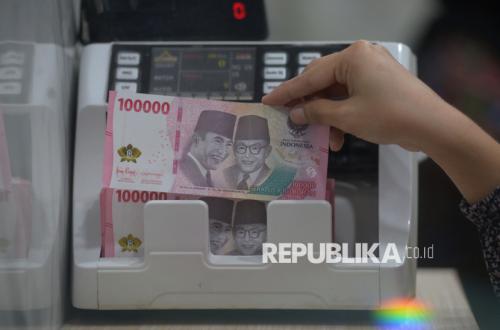
REPUBLIKA.CO.ID, JAKARTA – The rupiah exchange rate against the US dollar continues to weaken above the Rp17,200 level per dollar. The rupiah is still undergoing correction, even though it is assessed to be below its fundamental value or undervalued.
Citing Bloomberg, the rupiah weakened by 32 points or 0.19 percent to Rp17,243 per dollar at the close of trading on Tuesday (28/4/2026). In the previous trading session, the rupiah was at Rp17,211 per dollar.
“In conditions of rupiah weakening, the Government and BI (Bank Indonesia) always assume that the rupiah is below its fair value or undervalued. This narrative keeps repeating in various situations, whether during global turmoil, the pandemic, or when market conditions are relatively stable. Even when the exchange rate touches around Rp17,300 per dollar, similar statements emerge again,” said Currency and Commodities Observer Ibrahim Assuaibi in his statement on Tuesday (28/4/2026).
Ibrahim explained that historically, since 2014, the rupiah has been in the Rp12,000 per dollar range, until weakening to the Rp17,000 level per dollar in recent years. He questions the relevance of that narrative, given the long-term trend of the rupiah which has instead continued to depreciate.
“This condition should encourage a deeper evaluation of the understanding of the fair value of the rupiah, rather than continuing to repeat the same narrative,” he said.
He explained that on one hand, several Indonesian macroeconomic indicators appear relatively strong, such as controlled inflation, stable economic growth, and a sound financial system. On the other hand, there are structural dynamics that are deemed to need attention, such as foreign exchange reserves partly supported by debt, foreign investment inflows followed by outflows in the form of dividends and interest, and symptoms of economic structural weakening such as premature deindustrialisation. Dependence on short-term foreign capital flows also becomes a factor that makes the exchange rate vulnerable to external pressures.
“The use of the ‘rupiah undervalued’ narrative has shifted from economic analysis to a communication tool to dampen market panic and maintain optimism. However, this narrative has the potential to become problematic if repeated without being accompanied by real fundamental improvements. Strengthening confidence in the currency cannot be built merely through narrative. Such steps must be based on real economic fundamental improvements,” he clarified.