
Rupiah Under Pressure This Morning, US Dollar Rises to Rp17,875
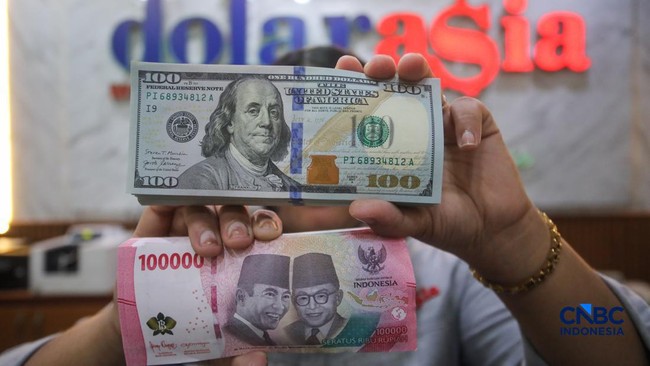
Jakarta, CNBC Indonesia — The rupiah exchange rate has not been able to escape pressure in trading this morning, Thursday (13/8/2026). The Garuda currency weakened again against the United States (US) dollar, even though US inflation slowed and the dollar index corrected at the start of the Asian trading session.
Referring to Refinitiv data, at the opening of trading, the rupiah experienced pressure of 0.06% or weakened to a position of Rp17,875/US.Thismorning′sweakeningcontinuesthepressurefromtheprevioustradingday.OnWednesday(12/8/2026), therupiahcloseddown0.20, marking a decline for two consecutive trading days.
Meanwhile, the US dollar index (DXY), which measures the greenback’s strength against six major world currencies, was observed weakening by 0.08% to 99.931 at 09.00 WIB. The DXY reversed its gains after closing up 0.19% in the previous session.
The rupiah’s movement today is still influenced by the market’s response to US consumer inflation data for July and the potential for foreign capital outflows from the domestic stock market following the MSCI index review. US annual inflation slowed to 3.4% in July from 3.5% in June. Core inflation, which excludes food and energy components, also fell to 2.5% from the previous 2.6%.
This data initially brought fresh air for emerging market currencies. The US dollar briefly weakened because the inflation slowdown reduced the likelihood of the US central bank (The Federal Reserve/The Fed) raising interest rates in the near term. The market is now pricing in only a 40% chance of a Fed rate hike in September, down from 44% before the inflation data was announced and 55% the previous week. The decline in probability was also influenced by a US employment report showing job losses in July.
However, the pressure on the dollar did not last long. The greenback reversed its gains because market participants assessed that the decline in inflation was not yet sufficient to change the Fed’s cautious stance on price pressures. The dollar also gained support from high US government bond yields. An auction of 10-year notes recorded strong demand with a yield of 4.683%, the highest since 2007.
Tensions between the US and Iran also maintained demand for the dollar as a safe-haven asset. Negotiations regarding the implementation of the June interim agreement were reported to have shown no progress, while uncertainty regarding the Strait of Hormuz continues.
Domestically, the rupiah faces additional risk after the August MSCI review removed several Indonesian stocks from the index list. This composition change has the potential to encourage foreign investors who track the MSCI index to adjust their portfolios. If this adjustment is accompanied by share sales and the conversion of funds into US dollars, foreign outflows could add further pressure to the rupiah.