
Rupiah Under Pressure: In Which Direction Will BI's Policy Move?
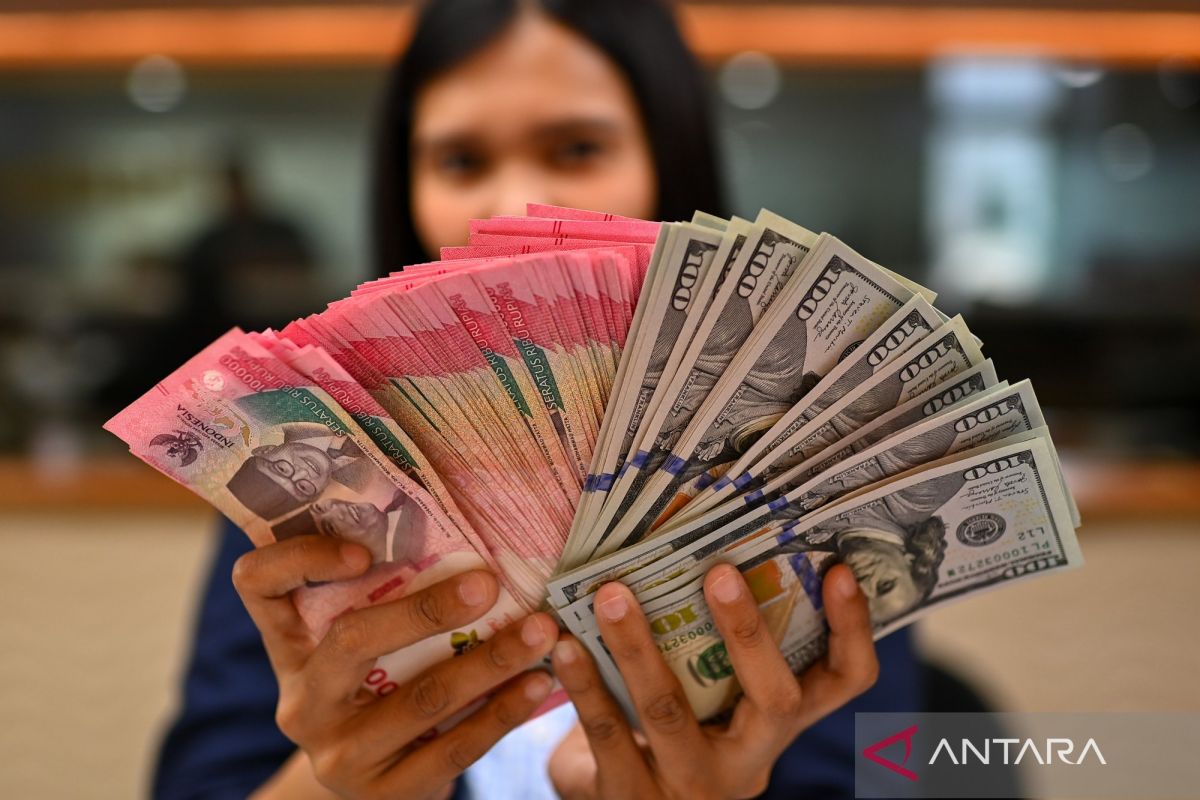
Jakarta (ANTARA) - The weakness of the rupiah is not merely about the numbers on the foreign exchange screen. This condition affects the prices of imported goods, energy costs, and also influences investors’ views on Indonesia’s economic prospects. When the rupiah falls, housewives feel it too, as prices of bread or noodles rise because the inputs for wheat must be imported. Not to mention the pass-through to costs shouldered by small entrepreneurs when the price of soybeans rises, or when plastic prices for industry soar. Even medicines are not spared, as a large portion of Indonesian pharmaceutical inputs are still imported.
In early May 2026, the rupiah weakened to a historic low of Rp 17,425 per US dollar. After that, the rupiah briefly strengthened for two consecutive days, reaching Rp 17,362 per US dollar.
By 19 May 2025, the rupiah had weakened again to Rp 17,700 per US dollar. If you compute BI’s Jakarta Interbank Spot Dollar Rate (Jisdor) data from 2 January to 18 May 2026, the currency’s depreciation stands at 5.8 percent year-to-date (YTD).
Exchange-rate movements are driven not only by demand and supply of foreign exchange, but also by global investor expectations, which often move beyond the economy’s fundamentals.
There are two layers that typically operate in tandem to influence the exchange rate. The first layer is external. When the US dollar strengthens due to Federal Reserve monetary policy or geopolitical uncertainties, foreign capital flows away from emerging markets as capital seeks safer assets. As a result, domestic foreign-exchange liquidity falls, driving up demand and causing the rupiah to weaken.
The second layer is domestic. To meet energy, industrial, and some food needs, Indonesia still relies on imports. This keeps domestic demand for US dollars high and persistent. Additionally, Indonesia’s exports are still largely raw materials, making prices volatile.
These two layers meet at a single point, leading to the conclusion that the rupiah’s exchange rate is not the responsibility of a single institution alone, but must be safeguarded through synergy and collaboration among the institutions responsible for monetary policy, fiscal policy, and the real sector.
The Fiscal Theory of the Price Level (FTPL) explains that determining the level of prices depends on the evolution of current and future fiscal variables. For example, government spending today must be matched by higher tax revenue in the future. If not, the impact is on the price level, and in an open economy such as Indonesia, on the exchange rate.
As an open economy, the exchange rate is also influenced by market expectations, capital flows, fiscal policies, and the balance of payments and current account conditions. Indonesia’s trade balance has recorded surpluses for several years, but the current account remains in deficit.
Long-term rupiah stability also depends on deeper economic foundations, and those foundations are largely built by government policy, not monetary policy.
There are several concrete steps that could strengthen those foundations. Such steps include strengthening domestic energy resilience so that dependence on imported energy falls, thereby reducing the obligation to pay in US dollars.