
Rupiah Under Pressure, Bank Indonesia Expected to Hold BI-Rate at 4.75 Percent
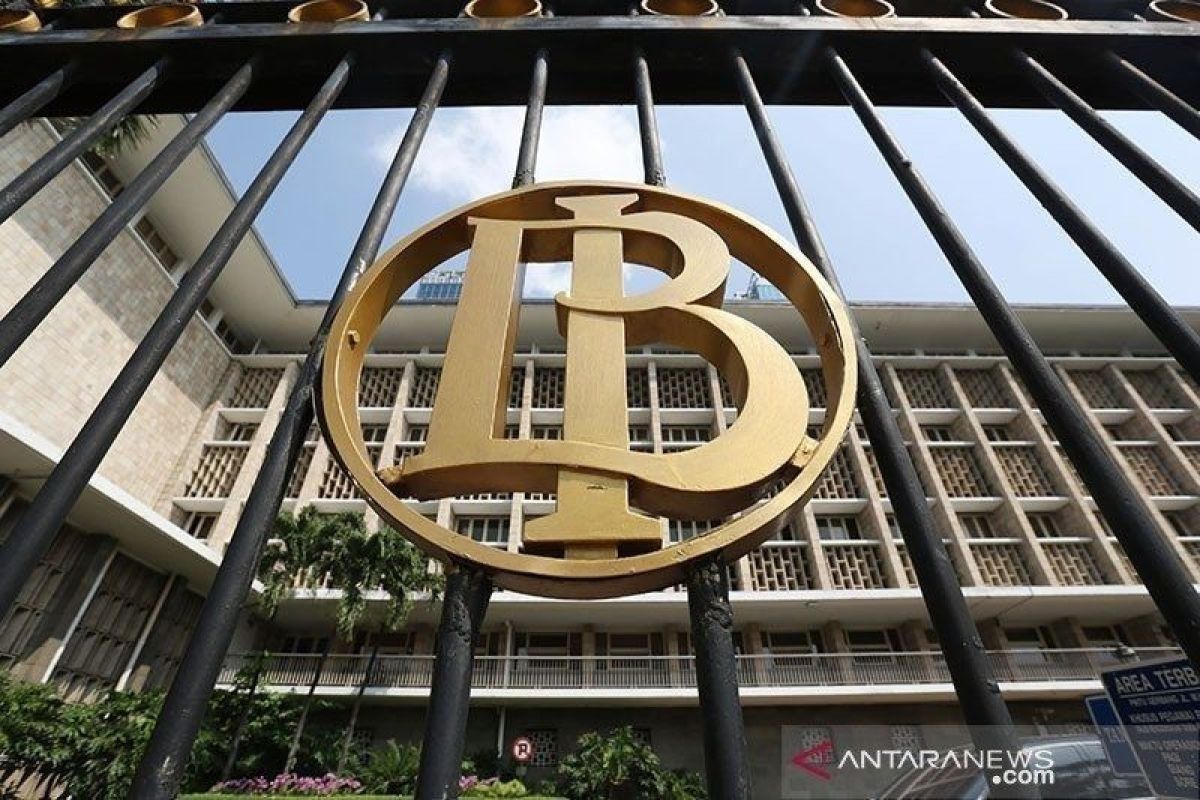
Several economists predict that Bank Indonesia will maintain the benchmark interest rate (BI-Rate) at 4.75% during the April 2026 Board of Governors Meeting. This forecast arises amid strong external pressures and increasing global inflation risks.
Chief Economist at Bank Mandiri, Andry Asmoro, assesses that the room for interest rate cuts is now increasingly limited due to rising inflation expectations.
“The room for rate cuts has run out due to higher inflation expectations,” he stated.
He predicts that the rupiah exchange rate in the short term, around one to three months ahead, will still face pressure and tend to move in the range of Rp17,000 per US dollar.
A similar view was expressed by Faisal Rachman, Department Head of Macroeconomic and Financial Market Research at Permata Bank, who believes the room for lowering the BI-Rate is narrowing amid global geopolitical uncertainties.
Nevertheless, he sees sentiment towards the rupiah beginning to improve. However, seasonal pressures in the second quarter—such as payments of yields to non-resident investors—still have the potential to pressure the domestic currency.
Entering the second semester, the rupiah is assessed to have a chance to strengthen because it is currently at a relatively undervalued level. Faisal predicts the rupiah could return below Rp17,000 per US dollar, even to the range of Rp16,800–Rp16,900, provided that economic fundamentals remain strong.
Meanwhile, Teuku Riefky, an economist in Macroeconomics and Financial Markets at the Institute for Economic and Social Research, Faculty of Economics and Business, University of Indonesia, notes that Indonesia’s annual inflation fell to 3.48% (year-on-year) in March 2026, in line with the fading effect of the previous low base from electricity tariff discounts.
However, he warns of increasing global uncertainties, particularly due to the escalation of the US-Iran conflict, which could drive imported inflation through rising energy prices and increase financial market volatility.
Riefky also highlights the direction of Federal Reserve System policy, which still faces a dilemma between curbing inflation and anticipating economic slowdown. Differences in views during the March Federal Open Market Committee (FOMC) meeting indicate increasingly limited policy room.
“The combination of inflation pressures and growth weakening increases stagflation risks, so the Fed tends to take a wait-and-see approach,” he said.
Domestically, pressure on the rupiah is also influenced by foreign capital outflows of around US$1.47 billion in the mid-March to mid-April 2026 period. This drove a 0.88% monthly rupiah depreciation, breaching the psychological level of Rp17,000 per US dollar.
Additionally, Bank Indonesia’s interventions are reflected in the decline of foreign exchange reserves by US$3.7 billion to US$148.2 billion at the end of March 2026. According to Riefky, premature monetary easing risks worsening rupiah pressure through capital outflows. Conversely, overly tight policy could also suppress domestic economic activity.
Therefore, BI is expected to maintain the BI-Rate at 4.75% while adopting a wait-and-see strategy, focusing on maintaining exchange rate stability and external resilience amid global uncertainties.
Source: jawawa.id (https://jawawa.id/newsitem/rupiah-under-pressure-bank-indonesia-expected-to-hold-bi-rate-at-4-75-percent-1776844302)
Originally published by Media Indonesia (https://mediaindonesia.com/ekonomi/882110/rupiah-tertekan-bank-indonesia-diyakini-tahan-bi-rate-475-persen), translated from Indonesian