
Rupiah Under Pressure as BI Steps Up Intervention and Market Coordination
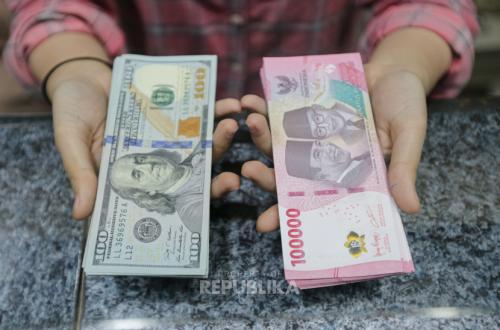
JAKARTA – Bank Indonesia (BI) is stepping up measures to stabilise the rupiah amid pressure on global financial markets and increased corporate demand for foreign currency ahead of the end of the month. The rupiah has also been affected by concerns that global index provider Morgan Stanley Capital International (MSCI) could reclassify shares, potentially triggering capital outflows.
BI Head of Monetary Management and Securities Assets Department Erwin Gunawan Hutapea said the central bank was continuing to coordinate with corporations and market participants to maintain exchange-rate stability.
“BI is continuing to strengthen coordination and communication with corporations and market participants to support rupiah exchange-rate stability,” Erwin said in a statement in Jakarta on Thursday (26 November).
He said financial markets were moving dynamically amid global risk-off sentiment and rising expectations of US interest-rate increases. Those expectations were fuelled by solid US economic data alongside persistent inflation, strengthening the US dollar and keeping the DXY index high against other currencies.
Erwin said BI was continuing to stabilise the exchange rate while taking market dynamics into account, so that the rupiah would move in line with its fundamental value. The measures involve integrated intervention in offshore and domestic markets.
“Stabilisation is carried out through integrated intervention in offshore markets via NDF transactions, and in domestic markets through spot and DNDF transactions, including government bond transactions in the secondary market. BI is also ensuring adequate foreign-currency liquidity in the banking sector,” Erwin said.
The rupiah briefly reached Rp18,400 per US dollar on Thursday afternoon. Bank Woori Saudara analyst Rully Nova forecast that it would weaken within a range of Rp18,290 to Rp18,400 per US dollar.
To maintain exchange-rate stability, BI has also raised its benchmark BI-Rate by a cumulative 125 basis points since the start of the year. The latest 25-basis-point increase in November 2026 took the rate to 6 per cent.
BI said the November rate rise was intended to strengthen rupiah stabilisation amid greater global uncertainty. The move was also pre-emptive, aimed at keeping inflation in 2026–27 within the target range of 2.5 per cent, plus or minus 1 percentage point.
The decision also took into account the possibility of a US Federal Reserve rate increase in December, to maintain the attractiveness of domestic assets. Meanwhile, Indonesia’s foreign-exchange reserves edged up to US$146.3 billion at the end of September 2026.
Source: jawawa.id (https://jawawa.id/newsitem/rupiah-under-pressure-as-bi-steps-up-intervention-and-market-coordination-1795679590)
Originally published by Republika (https://ekonomi.republika.co.id/berita/tp3lb2416/rupiah-tertekan-bi-perkuat-intervensi-dan-koordinasi-pasar), translated from Indonesian