
Rupiah: Trapped in the 'Pre-Revenue' Valley of Downstreaming?
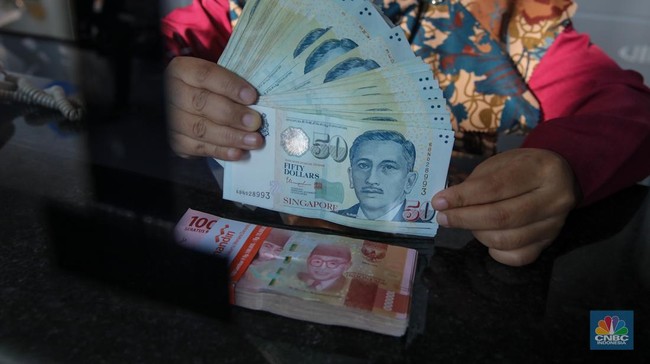
After briefly breaching the psychological level of Rp18,000 per US dollar, the rupiah strengthened sharply last week. On Friday (12/6/2026), the Garuda currency touched Rp17,845—a coincidental figure reflecting Indonesia’s independence date—before finally closing at Rp17,865. For those who still harbour dark memories of the 1997-1998 crisis, the Rp18,000 level is a spectre that triggers anxiety. However, is the current pressure equivalent to the Asian storm twenty-eight years ago? The short answer is no—but it has strong potential to become a similar crisis if the policy response is delayed.
The current macroeconomic landscape offers no room for complacency. Indonesia’s foreign exchange reserves at the end of May 2026 stood at US$144.9 billion, down US$1.3 billion from the end of April 2026 position of US$146.2 billion. This is the lowest position since mid-2024. Bank Indonesia (BI) explained that the decline was influenced by government foreign debt payments and stabilisation interventions for the rupiah exchange rate amidst global financial market uncertainty.
In response, BI has moved aggressively. On 9 June 2026, the central bank again raised the BI Rate by 25 basis points to 5.50%. This followed a 50 basis point hike to 5.25% on 20 May 2026. BI also conducted massive interventions in the foreign exchange market, increased the SRBI interest rate structure, provided hedging swap incentives for foreign investors, and opened a repo window for banks. However, this series of monetary interventions is akin to plugging a dam with a finger—effective momentarily, but not addressing the root of the problem. The draining of foreign exchange reserves actually weakens the credibility of the next line of defence.
Within the Mundell-Fleming trilemma framework, Indonesia’s options are now very limited. Maintaining exchange rate stability while preserving growth is a luxury that is difficult to sustain without a real and continuous injection of foreign exchange. Ironically, all this pressure is occurring while Indonesia is implementing an economic policy that is theoretically on target. Herein lies the deepest paradox of our current economic condition.
The government is executing a downstreaming agenda—a transformation of exports from raw materials to value-added products. This step has a strong academic footing in resource-based development and structural transformation theories. The ban on nickel ore exports, the massive construction of smelters, and the obligation for domestic mineral processing are structurally and constitutionally correct steps, in line with the mandate of Article 33 of the 1945 Constitution.
However, one thing is often overlooked by policymakers: a policy maturity mismatch. Structural transformation policies require years to yield optimal results. Meanwhile, the short-term impact—the loss of export revenue from raw commodities before domestic processing capacity is fully operational—creates what can be called a ‘valley of death’ in the balance of payments. This condition is best understood as a pre-revenue economy phase. It is a phase where large investments have been disbursed, smelters have been built, regulations have been tightened, and capacity has been increased, but the optimal revenue stream has not yet been achieved because downstream infrastructure is not yet operating at full capacity.
Like a start-up burning venture capital before reaching break-even point, Indonesia is currently ‘burning’ its foreign exchange reserves before downstreaming delivers the promised surplus. This phenomenon is exacerbated by three structural distortions that have long eroded the national economy. First, trade under-invoicing, the leakage of export value through under-reporting of actual prices, which is estimated to reach 15-20% of the total value of mineral exports. Second, the repatriation of profits abroad by multinational corporations operating in the extractive sector. Third, an acute dependence on raw commodity exports, which makes the rupiah highly vulnerable to global price cycles—a classic symptom of Dutch Disease that, paradoxically, has now reversed: abundant resources underground, yet a weakening exchange rate.
From a systems dynamics perspective, the rupiah’s fate is determined by two causal loops. The first is a reinforcing cycle: when mining production rises, exports increase, foreign exchange reserves grow, the rupiah strengthens, investor confidence recovers, and investment is boosted again. However, Indonesia is currently trapped in a second, balancing but destructive cycle: policy uncertainty suppresses export volumes, foreign exchange reserves dwindle, the rupiah weakens, import costs and foreign debt burdens soar, and ultimately fiscal pressure and inflation erode investment momentum.
The strategic question is not whether downstreaming should continue. It is how to escape this valley without dismantling the structural transformation that has been painstakingly built. The Rp18,000 level has become an anchor for market expectations. In financial market psychology, a level that is repeatedly tested tends to be breached. And once breached, it becomes a new psychological floor. Without a firm fiscal response, the potential for the rupiah to breach Rp19,000-20,000 is no longer an extreme scenario. The consequences would be widespread inflationary pressure, a multiplied government debt burden denominated in foreign currency, and most dangerously, a trigger for a self-fulfilling crisis that is far more difficult to control.
The solution currently advocated by the national mining industry does not actually contradict the spirit of downstreaming. This solution is a form of ambidextrous policy execution.