
Rupiah, the Dollar, and Lessons in Democracy from BJ Habibie
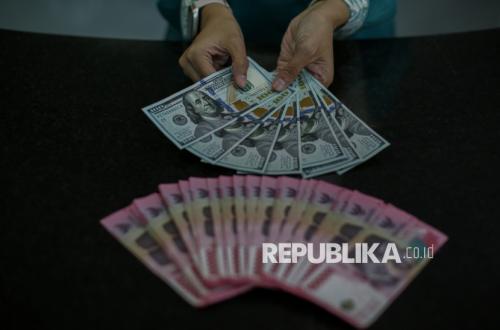
The exchange rate of the Rupiah against the US Dollar continues to experience fluctuations in the global spot market. Dynamic global economic fluctuations often place the ‘Garuda’ currency under pressure. However, Indonesia once recorded a monumental financial phenomenon during the leadership era of President BJ Habibie.
When Habibie assumed the presidency in May 1998, the national economic condition was at its nadir. The Asian financial crisis had devastated the domestic economic foundations built by the New Order regime. Foreign capital flight occurred on a massive scale due to the collapse of market confidence in national stability.
The impact of this economic destruction was felt brutally by the Rupiah. The exchange rate plummeted to levels as low as Rp 16,650 per US Dollar. This collapse triggered a domino effect that damaged all sectors of society. The cost of importing industrial raw materials soared, causing many large national companies to go bankrupt instantly. Unemployment rates surged, creating new waves of joblessness across various regions, while the prices of basic necessities climbed daily, destroying the purchasing power of the lower class.
The real situation on the ground was further exacerbated by a massive surge in national inflation. Throughout 1998, Indonesia’s inflation rate soared to 77.6 per cent. The monetary crisis was no longer just a figure on paper but a real specter strangling the populace.
Why is the Rupiah under pressure against the Dollar? Pressure on the Rupiah has returned to the public spotlight. The exchange rate is moving fluctuatively away from its previous psychological levels. The domestic financial market is facing uncertainty due to rapidly moving global economic dynamics. Bank Indonesia (BI) noted that the Ruplam was pressured to breach the Rp 16,400 per US Dollar level. This weakening was triggered by high interest rate policies from the US central bank, the Fed, as global investors tend to withdraw capital from emerging markets towards safer assets.
Global geopolitical sentiments have also worsened the national macro-economic fundamentals. Rising global crude oil prices have increased the energy subsidy burden on the state budget (APBN). Indonesia’s trade balance, which is usually in surplus, is now beginning to experience a gradual contraction in volume. The Government and Bank Indonesia need to continue intervening to maintain monetary stability and prevent disruptions to public purchasing power. Intensive interventions in the foreign exchange and bond markets are conducted daily to prevent imported inflation from fluctuating domestically.
Radical Steps for Monetary Salvation: Facing such an extreme situation, President BJ Habibie did not choose to panic or remain passive. As an internationally recognised scientist, he viewed economic problems through a rational and system-based approach. Habibie realised that the primary cause of the crisis was the loss of credibility in financial institutions due to past political interventions.
Therefore, Habibie immediately implemented a highly radical monetary recipe for his time. He granted full independence to Bank Indonesia through the enactment of Law Number 23 of 1999. Through this regulation, the central bank was officially freed from all forms of government or political intervention. The monetary authority was given full rights to regulate the financial system without pressure from the executive branch. This bold institutional restructuring proved to be an incredibly intelligent and effective economic decision. The real results of this new policy manifested incredibly quickly in the financial markets.
In less than a year, the Rupiah exchange rate moved sharply and consistently stronger. Our currency managed to reverse the situation, reaching the level of Rp 6,500 per US Dollar in 1999. This sharp appreciation became the highest currency appreciation record ever recorded in world history. The global financial market, which initially looked down upon Indonesia, reversed its stance to provide positive appreciation. Alongside the strengthening Rupiah, the national inflation rate was also significantly subdued, dropping from a terrifying 77.6 per cent to 2.0 per cent by the end of 1999.
Democracy as an Anchor of Stability: For BJ Habibie, the exchange rate of the Dollar against the Rupiah was not merely a matter of mathematics. He understood that currency stability is fundamentally the fruit of robust public trust. True trust cannot be forced; it must arise from a clean and open system of government.
There are expensive lessons in democracy to be learned from Habibie’s brief leadership period. Habibie proved to the world that financial markets respond positively to legal certainty and freedom. Amidst the crisis, he chose to expand the democratic space for all citizens. The first steps of democracy began with opening the floodgates of press freedom, which had previously been stifled. The mass media was given full freedom to criticise the government without fear of censorship. Furthermore, hundreds of political prisoners from the previous era were released unconditionally as a symbol of reconciliation.
The pinnacle of this commitment to democracy was the acceleration of the General Election in June 1999. The election was conducted with great honesty, fairness, and safety, involving dozens of new political parties. The execution of a clean election dispelled the fears of many regarding the threat of social division in Indonesia. International institutions and foreign investors viewed this political agenda as…