
Rupiah Strengthens, US Dollar Exchange Rate Falls to Rp17,165
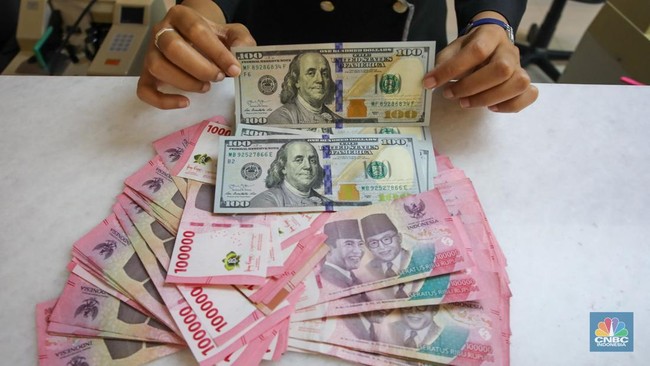
Jakarta, CNBC Indonesia - The rupiah exchange rate closed stronger against the US dollar on early-week trading on Monday (20/4/2026). According to Refinitiv data, the Garuda currency ended the session in the green with a 0.09% gain to the level of Rp17,165/US.Thisstrengtheningreversedtherupiah′spositionafteritclosedsharplyweakerby0.32 in the previous session on Friday (17/4/2026). Throughout the day’s trading, the rupiah opened stronger. At the start of the session, the rupiah appreciated as much as 0.15% to Rp17,140/US$. Although the gains were slightly trimmed towards the close, the rupiah still managed to hold in positive territory. Meanwhile, the US dollar index (DXY) at 3:00 PM WIB was still up 0.22% at 98.310. The rupiah’s strengthening today took place amid the continued rise of the US dollar index. This means the rupiah was able to resist the dominance of the greenback, at least temporarily, amid market sentiment still tending towards chasing dollar-denominated safe-haven assets due to uncertainties from the Middle East conflict. The US dollar had strengthened to a one-week high against major world currencies this morning before trimming some of its gains. This movement occurred after tensions between the US and Iran escalated again, dimming market hopes for a peace agreement in the Middle East. The United States stated on Sunday that it had seized an Iranian cargo ship attempting to breach the blockade. On the other hand, Iran affirmed it would retaliate, reigniting market concerns over the potential for further conflict. Tehran also stated it would not attend the second round of negotiations, which the US had hoped to start before the two-week ceasefire with Iran ends on Tuesday. Quoting Reuters, Saxo Chief Investment Strategist Charu Chanana said the escalation over the weekend has reintroduced geopolitical risk premiums, just as markets had begun pricing in the chances of peace. According to her, the current rise in oil prices is not solely an energy issue but also relates to economic growth prospects and interest rate directions.