
Rupiah Strengthens to Rp17,840 After BI Holds BI Rate at 5.75 Percent
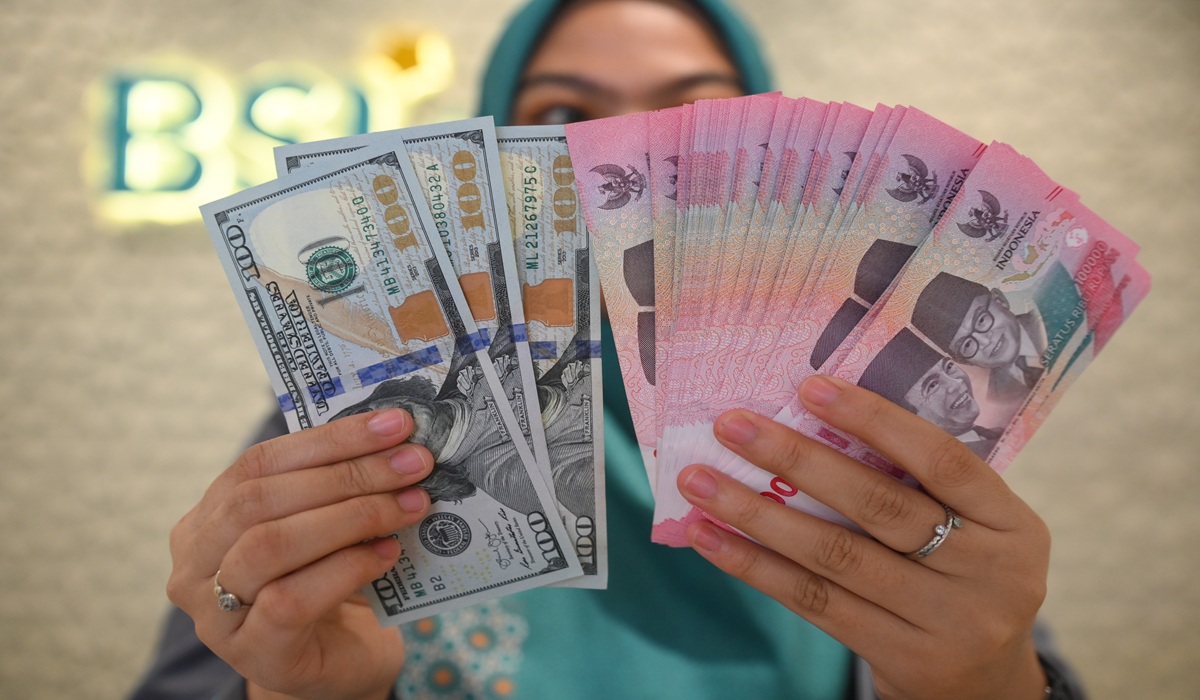
The rupiah exchange rate against the US dollar closed stronger on Wednesday (19/8/2026), following Bank Indonesia’s decision to hold its benchmark interest rate at the August 2026 Board of Governors Meeting. Based on market data, the rupiah strengthened by 22 points, or 0.12 percent, to Rp17,840 per US dollar, compared with the previous close of Rp17,862 per US dollar. In line with the spot market, Bank Indonesia’s Jakarta Interbank Spot Dollar Rate also strengthened to Rp17,844 per US dollar from Rp17,856 previously.
Director of Laba Forexindo Berjangka, Ibrahim Assuabi, said the main positive sentiment came from BI’s decision to hold the BI Rate at 5.75 percent. The central bank also set the Deposit Facility rate at 4.75 percent and the Lending Facility rate at 6.50 percent. “This interest rate decision remains consistent with efforts to maintain rupiah exchange rate stability from the impact of high global turmoil due to the war in the Middle East,” Ibrahim said in a written statement.
The monetary policy move is also aimed at keeping inflation within the government’s target range of 2.5±1 percent while supporting national economic growth. BI also expanded incentive policies to increase foreign portfolio investment inflows and deepen the foreign exchange market.
From the external side, the market remains overshadowed by uncertainty in the Middle East, particularly regarding the status of the Strait of Hormuz. There are differing statements between the United States and Iran regarding access to the vital shipping lane. US President Donald Trump asserted that the strait remains open, while Iran claims the route is closed to shipping traffic.
Ibrahim added that the end of the temporary ceasefire agreement on Monday (17/8) triggered new concerns. Senior Iranian officials said the country was shifting to an offensive military posture due to the diplomatic deadlock, although there were no reports of new attacks as of Tuesday (18/8). Investors continue to monitor the geopolitical situation because it could affect liquidity and stability in global money markets.