
Rupiah Strengthens Slightly Following BI Rate Hike, US Dollar Now at Rp18,080
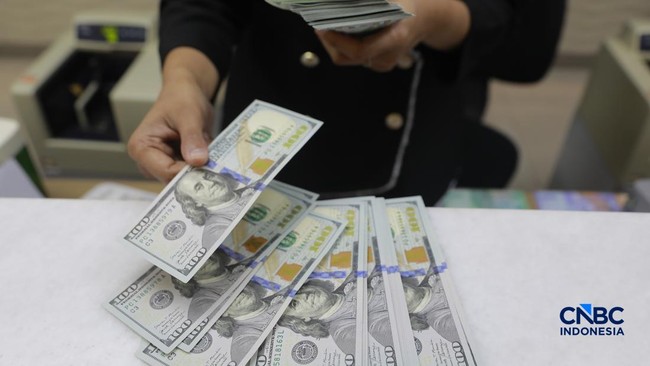
On Tuesday (9/6/2026) at 12:30 WIB, Bank Indonesia announced a 25 basis point increase in the BI Rate to 5.50% during its Weekly Board of Governors Meeting. According to Refinitiv data, as of 12:3<0xA0>30 WIB, the Rupiah was trading at Rp18,080/US$, representing an appreciation of approximately 0.50% against the US Dollar. This follows the previous day’s performance, where the USD/IDR exchange rate had weakened to Rp18,170, a depreciation of 0.89%.
In the global market, the US Dollar Index (DXY) has been trending downwards since this morning. As of 12:30 WIB, the DXY fell by 0.14% to 99.908, although it remains relatively high after a sharp 0.66% increase in the final trading session of last week, which pushed it back above the 100 level.
The Weekly Board of Governors Meeting on 9 June 2026 decided to raise the BI-Rate by 25 bps to 5.50%, the Deposit Facility rate by 25 bps to 4.50%, and the Lending Facility rate by 25 bps to 6.25%. This hike serves as a follow-up measure to strengthen the stability of the Rupiah exchange rate against the impact of high global volatility caused by the war in the Middle East. It also acts as a pre-emptive step to ensure inflation for 2026 and 2027 remains within the government’s target range of 2.5±1%.
Furthermore, this policy aims to increase yields to attract foreign portfolio investment inflows into Indonesia. In accordance with existing laws and practices, Bank Indonesia holds Weekly Board of Governors Meetings every Tuesday to evaluate the implementation of the policy mix established during the Monthly Board of Governors Meetings. Evaluations since the Monthly Meeting on 19-20 May 2026 indicated that the Rupiah exchange rate had weakened more than anticipated. This weakness was driven by ongoing global volatility, high domestic demand for foreign exchange, and foreign portfolio investment outflows from Indonesia.
Consequently, Bank Indonesia deemed it necessary to take further steps to strengthen the stability of the Rupiah exchange rate by increasing yields and providing other incentives within monetary operations to encourage foreign investment inflows. Stabilising the Rupiah is also intended to ensure Indonesia’s external economic resilience and the achievement of inflation targets for 2026 and 2027.