
Rupiah Strengthens as US Dollar Settles at Rp17,960
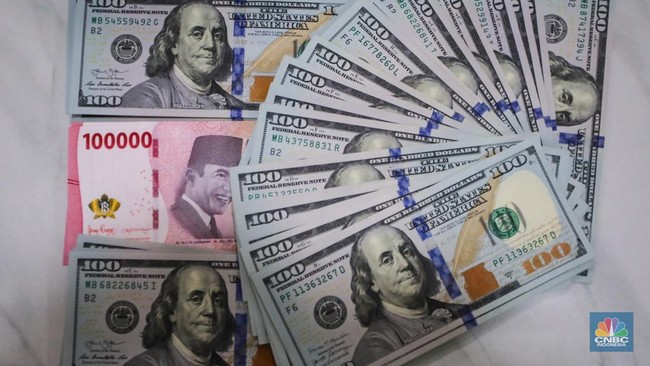
The Rupiah successfully escaped downward pressure and reversed to strengthen against the US Dollar at the close of trading on Tuesday (29/09/2026).
According to Refinitiv data, the Rupiah ended the session at Rp17,960/US, representingaslightappreciationof0.03 level.
Pressure was evident at the start of today’s trading. The Rupiah opened 0.03% lower at Rp1tar7,970/US$, with the decline widening as the US Dollar briefly breached the Rp18,010 mark. This represented the Rupiah’s weakest level of the day. However, the ‘Garuda’ currency subsequently rebounded 40 points from its lowest point to finish in the green.
Meanwhile, the US Dollar Index (DXY), which measures the strength of the greenback against six major world currencies, was observed to have strengthened by 0.14% to 101.338 as of 15:00 WIB.
Bank Indonesia (BI) assessed that the pressure on the Rupiah stems from a combination of global sentiment and domestic foreign exchange demand. Erwin Gunawan Hutapea, Head of the Monetary Management and Securities Assets Department at BI, stated that concerns regarding global inflation and fiscal risks continue to drive the strengthening of the US Dollar.
Inflationary pressures have risen again as oil prices climbed above US$108 per barrel, following the lack of an agreement regarding the reopening of the Strait of Hormuz. This situation has increased the likelihood that the Federal Reserve (The Fed) will continue its monetary policy tightening.
“This is driving expectations of further US monetary policy tightening, causing the 10-year US Treasury yield to rise back to 5.23%, the highest since 2007,” Erwin noted in a written statement.
Domestically, pressure on the Rupiah also originates from increased foreign exchange demand by importers ahead of the end of the third quarter of 2026. Outflows from emerging market asset portfolios, amidst rising bond yields, have further added to the pressure.
Nevertheless, BI considers the Rupiah’s movement to be in line with regional currencies. On a quarter-to-date (QTD) basis, the Rupiah’s depreciation remains limited to 0.67%.
Indonesia’s foreign exchange reserves also increased to US$146.5 billion at the end of August 2026. These reserves serve as a pillar for BI’s ability to maintain exchange rate stability.
BI has ensured it will remain active in the market to ensure market mechanisms function properly and to ensure the Rupiah moves in accordance with its fundamentals. Stabilisation strategies are being implemented through non-deliverable forward (NDF) transactions in overseas markets, as well as spot transactions and domestic non-deliverable forward (DNDF) in the domestic market. BI is also conducting purchases of Government Securities (SBN) in the secondary market.
Furthermore, BI is strengthening market-oriented or pro-market monetary operations, increasing incentives for swap instruments and DNDF hedging, and enhancing coordination with corporations and market participants.