
Rupiah strengthens as potential Fed rate hike diminishes
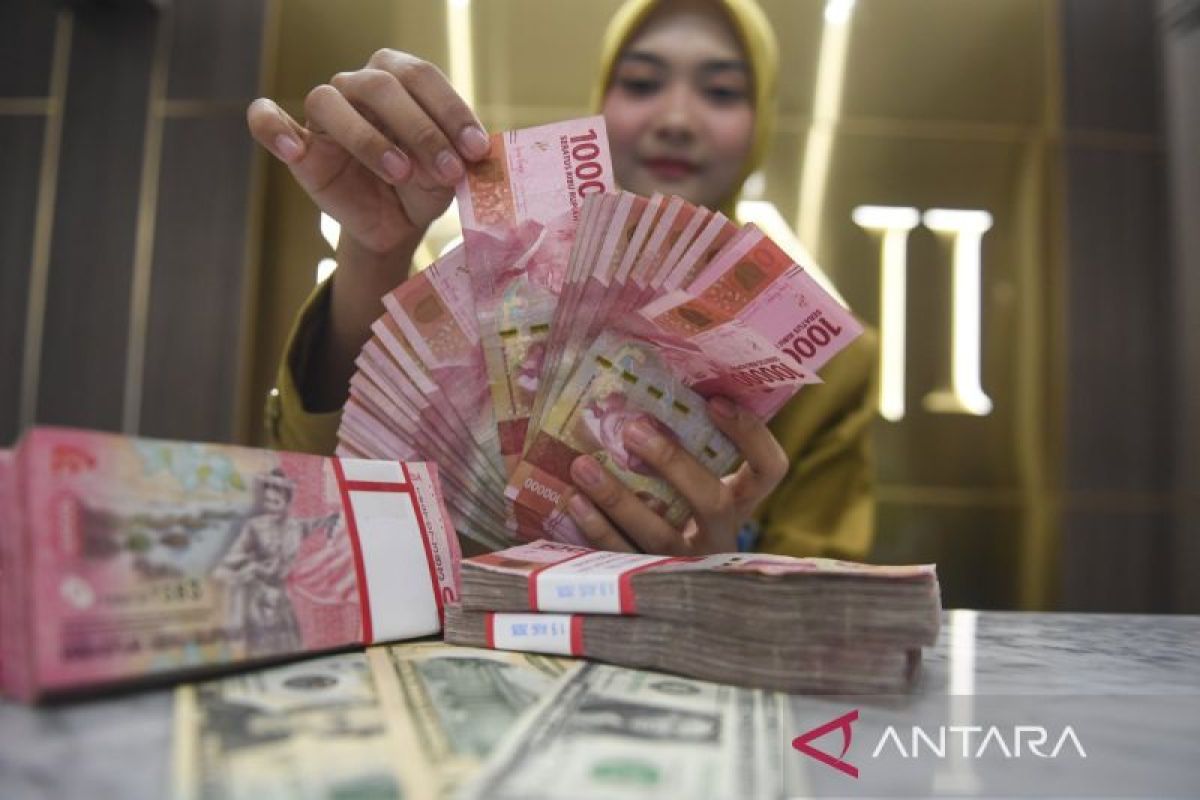
The exchange rate of the Rupiah against the US Dollar closed stronger on Tuesday, gaining 18 points or 0.10 per cent to Rp17,899 per US Dollar compared to the previous close of Rp17,917 per US Dollar.
Currency analyst and Director of PT Traze Andalan Futures, Ibrahim Assuabi, assessed that the Rupiah’s strengthening was influenced by the diminishing potential for a Federal Reserve interest rate hike.
“This weaker employment and inflation data has reduced the possibility of a Fed rate hike at the upcoming meeting on 27-28 October,” he stated in a written statement in Jakarta on Tuesday.
Previously, it was reported that the Personal Consumption Expenditures (PCE) recorded lower than expectations. The PCE Price Index remained at 3.4 per cent year-on-year (yoy) in August 2026, below the consensus of 3.7 per cent yoy.
Furthermore, US non-farm payroll (NFP) data, as reported by Xinhua, added only 29,000 jobs in September, far below estimates. Meanwhile, the unemployment rate rose to 4.2 per cent in September 2026, up from 4.1 per cent in the previous month.
The sluggish job growth in September contrasts with the solid increase of 133,000 jobs in August. Economists surveyed by Reuters and The Wall Street Journal had previously estimated a payroll increase between 84,000 and 90,000 for September.
Additionally, the total NFP figure for July was revised down from an increase of 21,000 to a decrease of 10,000, and the August figure was revised down by 29,000, from 162,000 to 133,000. The total downward revision for non-agricultural sector jobs over the previous two months reached 60,000.
“Currently, the market is awaiting the release of the minutes from the September Federal Open Market Committee (FOMC) meeting on Wednesday (7/10), as well as initial jobless claims data on Thursday (8/10),” said Ibrahim.
Based on these factors, the probability of the Fed maintaining its policy rate this month exceeds 80 per cent, while the likelihood of a 25 basis point rate hike in December reaches 95 per cent, according to reports from Anadolu.
Regarding domestic sentiment, positive momentum stems from a World Bank report projecting Indonesia’s 2026 economic growth to reach 5.2 per cent. This projection has been revised upwards by 0.5 percentage points.
“This surge in growth reflects strengthening private consumption and increased public spending at the turn of the year. The earlier arrival of Ramadan and Eid al-Fitr, the disbursement of THR (Holiday Allowance) and 13th-month salaries, as well as the accelerated launch of the Free Nutritious Meal (MBG) programme, are noted to have successfully shifted government spending earlier in the fiscal cycle,” he said.
Nevertheless, the World Bank also highlighted that domestic economic activity appears to weaken thereafter, marked by a decline in the manufacturing Purchasing Managers’ Index (PMI) to 49.3 in August, and a slowdown in consumer confidence to 116.8 in July. On the other hand, a widening deficit has triggered market concerns regarding fiscal trends and sovereign ratings.
Furthermore, the World Bank projects that Indonesia’s current account deficit is expected to widen to 1.5 per cent of Gross Domestic Product (GDP) in 2026. For inflation, it is predicted to remain around the upper limit of the target range set by Bank Indonesia (BI) and the government, which is 2.5±1 per cent.
The Jakarta Interbank Spot Dollar Rate (JISDOR) from Bank Indonesia also moved stronger to the level of Rp17,910 per US Dollar from the previous Rp17,917 per US Dollar.