
Rupiah Strengthens Amid Projections of Continued Monetary Policy Easing
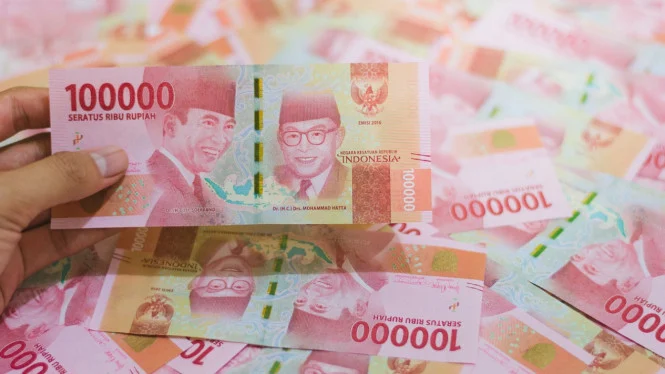
Jakarta, VIVA – The rupiah exchange rate against the US dollar is predicted to remain volatile, though it closed weaker in trading on Monday.
Based on data from the Jakarta Interbank Spot Dollar Rate (JISDOR) published by Bank Indonesia, the rupiah stood at Rp 16,844 per US dollar on Friday, 13 February 2026. This represented a weakening of 18 points from the previous rate of Rp 16,826 on Thursday, 12 February 2026.
Meanwhile, in spot market trading on Monday, 16 February 2026, as of 10:29 WIB, the rupiah was transacted at Rp 16,829 per US dollar. This position strengthened by 7 points, or 0.04 per cent, from the previous level of Rp 16,836 per US dollar.
Economic and money market analyst Ibrahim Assuaibi said Indonesia’s economic growth is projected to be in the range of 5 per cent in 2026, amid a broader slowdown in Asian and global economies.
“In principle, monetary policy easing has the potential to continue, in line with the easing trend in global inflation and the tendency of central banks worldwide to maintain an accommodative stance,” Ibrahim said in his daily research note on Monday, 16 February 2026.
The slowdown is primarily driven by concerns regarding the sustainability of private consumption and the effectiveness of investment realisation. However, in the medium term, Indonesia is considered to have strong fundamentals.
Furthermore, Indonesia holds significant potential in cross-country export potential indices, taking into account various factors ranging from manufacturing capacity, availability of skilled labour, labour costs, business environment, to energy. As a result, Indonesia ranks fifth behind Vietnam, whilst China holds the top position.
Moreover, amid growing global demand for production capacity and supply, Indonesia has a significant opportunity to capitalise on this momentum, with economic growth predicted to improve further in the coming year.
“The rupiah will fluctuate but is expected to close weaker in the range of Rp 16,830 to Rp 16,860,” he said.
Uncertainty regarding future US interest rate cuts remains the primary burden on metal prices, particularly after payroll data showed some signs of resilience in the labour market in January. The US dollar recovered from its weekly low following non-farm payroll data released on Wednesday.
Focus is now entirely on US Consumer Price Index inflation data for January, due to be released on Friday this week, for further clues about the world’s largest economy. Labour market strength and inflation are the two largest considerations for the Federal Reserve’s interest rate decisions.