
Rupiah Strengthens Amid Projection of Indonesia's Q1 Economic Growth at 5.2 Percent
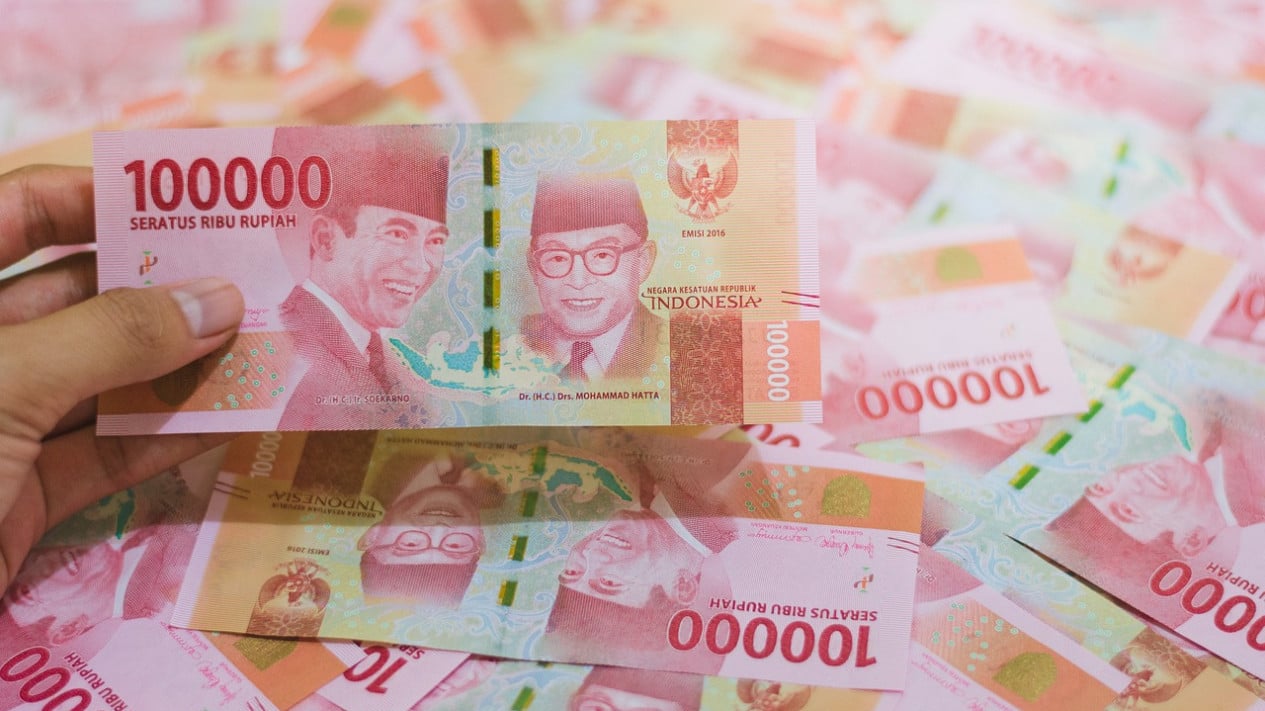
Jakarta, VIVA – The rupiah’s exchange rate against the US dollar is expected to remain volatile but closed weaker in trading today.
Based on data from the Jakarta Interbank Spot Dollar Rate (Jisdor) from Bank Indonesia, the rupiah’s rate against the US dollar stood at Rp16,999 on Tuesday, 31 March 2026. That position weakened by 6 points from the previous rate of Rp16,993 in Monday’s trading on 30 March 2026.
Meanwhile, in spot market trading on Wednesday, 1 April 2026 until 09:08 WIB, the rupiah was traded at Rp16,975 per US dollar. That position strengthened by 66 points or 0.39 percent from the previous position at Rp17,041 per US dollar.
Economic and money market observer Ibrahim Assuaibi stated that economists project first-quarter 2026 economic growth to be in the range of 5.1-5.2 percent. The main drivers are household consumption and government spending.
However, there are obstacles from the slowdown in gross fixed capital formation (PMTB)/investment and net exports, caused by deteriorating global conditions in March 2026 due to the war in the Middle East, which is pressuring energy prices, financial markets, and exchange rates.
The main triggers for first-quarter growth primarily come from very strong seasonal momentum, such as the Ramadan momentum, Eid al-Fitr, holiday allowances (THR), social assistance, transport discounts, and homecoming movements. These factors have driven household spending, transport services, trade, food and beverages, and economic activities in the regions.
On the other hand, consumer confidence in February 2026 remained high at 125.2, retail sales strengthened, and the manufacturing PMI at 53.8 indicates that the business world is still moving. In addition, state spending also grew very rapidly at the beginning of the year, so the push from the demand side and the fiscal side came together.
In that context, the growth pattern that is still dominated by consumption is indeed encouraging for the short term, but not yet healthy enough for the long term.
Consumption is indeed the main pillar of the Indonesian economy and contributes around 53-54 percent to Gross Domestic Product (GDP), so when the global world weakens, domestic demand can hold back the slowdown.
On the other hand, positive signals are reflected in the Bank Indonesia (BI) survey, which shows the portion of household income used for consumption decreased to 71.6 percent. Meanwhile, the savings portion rose to 17.7 percent. This means households are still spending, but starting to be a bit more cautious.