
Rupiah Strengthens Amid Fiscal Sentiment and BI Rate Support
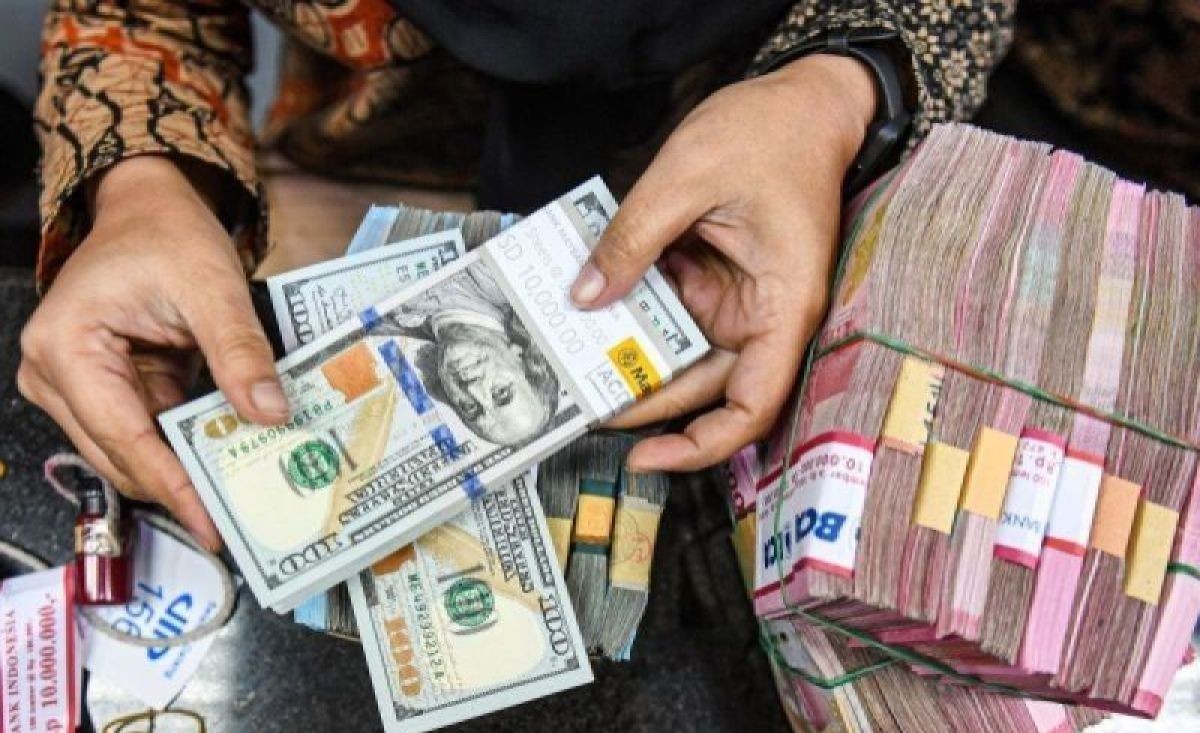
The rupiah exchange rate showed positive performance in trading on Thursday, 11 June 2026. Based on market data, the rupiah strengthened slightly by 3 points or 0.02% to the level of Rp17,941 per US dollar, compared to the previous closing position of Rp17,944 per US dollar.
Chief Economist of Permata Bank, Josua Pardede, revealed that today’s rupiah strengthening was driven by the easing of market concerns regarding Indonesia’s fiscal outlook. The decline in global oil prices and the government’s policy in adjusting Pertamax fuel prices were deemed effective in reducing pressure on the national fiscal balance.
In addition to domestic factors, the rupiah received support from Bank Indonesia’s monetary policy. The transmission of the BI interest rate hike announced the previous day began to be felt, increasing the attractiveness of domestic asset yields for foreign investors.
From an external perspective, market attention is focused on United States inflation data. US headline inflation in May 2026 was recorded to have risen to 4.2% (yoy), triggered by a 23.5% surge in energy prices due to tensions in the Middle East. However, on a monthly basis (mom), US core inflation actually slowed to 0.2%, lower than the market expectation of 0.3%.
“The data indicates that inflationary pressure from energy prices is not as strong as feared. Investors are beginning to slightly reduce expectations regarding the aggressiveness of the Fed’s rate hikes this year,” explained Josua.
A combination of a more controlled fiscal deficit and slowing core inflation in the US provides space for the rupiah to remain stable. The rupiah is predicted to continue moving within a controlled consolidation range throughout the day.
With improving fundamental conditions, the domestic bond market is also expected to be boosted alongside increasing investor confidence in Indonesia’s macroeconomic stability amidst global uncertainty.
The increase in Bank Indonesia’s benchmark interest rate (BI Rate) will not automatically strengthen the rupiah exchange rate.
Indonesia’s foreign exchange reserves in May 2026 fell to US$144.9 billion. Economist Josua Pardede assessed that this position remains strong, covering 5.5 months of imports.
Josua explained that Panda Bonds could indeed reduce dependence on the US Dollar (USD) and open access to the Chinese financial market.
Indonesia’s trade balance, which continued to record a surplus throughout 2025, reflects the resilience of the external sector.
National exporters will face significant challenges alongside the obligation for full placement of Export Proceeds (DHE) in Himbara banks starting 1 January 2026.
The rupiah exchange rate on Thursday (11/6) morning opened stronger by 0.02 percent to the level of Rp17,941 per US dollar amidst global market dynamics.
APPBI DKI Jakarta is optimistic that the 2026 Jakarta Great Sale Festival (FJGS) will reach its target of Rp16 trillion despite the rupiah’s weakness against the US dollar.
Haris acknowledged that the implementation of current government strategic programmes has not yet been perfect and still requires technocratic strengthening at the bureaucratic level.
The Central Java Provincial Government was forced to conduct a thorough evaluation of road infrastructure development programmes in its region.
The Minister of MSMEs, Maman Abdurrahman, acknowledged that the weakening of the rupiah against the US dollar, which recently touched Rp18,000 per dollar, has impacted the MSME sector.
Source: jawawa.id (https://jawawa.id/newsitem/rupiah-strengthens-amid-fiscal-sentiment-and-bi-rate-support-1781153469)
Originally published by Media Indonesia (https://mediaindonesia.com/ekonomi/899342/rupiah-menguat-sentimen-fiskal-dan-suku-bunga-bi-jadi-penopang), translated from Indonesian