
Rupiah Strengthening Supported by SRBI, Indef Highlights Credit Tightening Risks
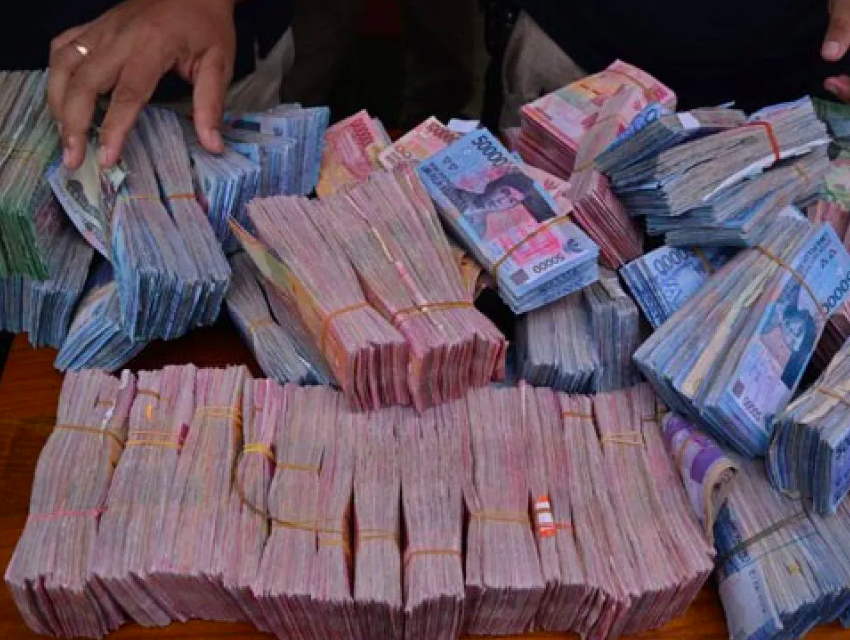
The strengthening of the rupiah exchange rate in recent days is considered inseparable from high investor interest in Bank Indonesia Rupiah Securities (SRBI) instruments. However, behind this, there are consequences for the real sector that need to be watched, primarily concerning bank lending to the productive sector.
Head of the Center of Industry, Trade, and Investment at the Institute for Development of Economics and Finance (Indef), Andry Satrio Nugroho, assessed that the increased placement of funds in SRBI, which offers high yields, has the potential to encourage banks to prefer parking liquidity rather than channelling it through credit to the industrial sector.
“Indeed, the rupiah’s performance has been quite positive lately. One of the drivers is the monetary instrument, where we know from auctions that a considerable amount of rupiah has entered SRBI,” Andry said during an online Indef discussion titled ‘Purchasing Power Depressed, Economic Resilience at Stake’ on Sunday (14/6).
Indef noted that SRBI auction participants are increasingly demanding rates of return far above the weighted average, reflecting increased risk perception in the market. This can be seen from the widening spread of 12-month tenor SRBI bids, from minus 30 basis points (bps) in early April with a yield range of 5.50%-5.80%, to 118 bps on 5 June with a range of 7.10%-8.28%, and widening again to 146 bps on 12 June with a range of 7.40%-8.86%. This increase indicates that investors are demanding a higher risk premium amid economic uncertainty.
On the other hand, Bank Indonesia initially held back before eventually increasing liquidity absorption through SRBI. On 6 May, total bids for 12-month tenor SRBI reached Rp32.6 trillion, but BI only absorbed Rp1.86 trillion at a yield level of 6.50%. Entering June, BI began raising the cut-off yield and again absorbing large amounts of funds, including Rp36 trillion on 12 June.
According to Andry, this condition is one of the costs that must be borne to maintain the stability of the rupiah exchange rate. He highlighted the large amount of funds absorbed in the 12-month tenor SRBI. Of the total funds received in the 12 June auction of Rp36 trillion, around Rp30 trillion came from that tenor.
“On 12 June, the total accepted reached Rp36 trillion. Rp30 trillion of that came from the 12-month tenor. So quite a lot entered that tenor,” he said.
He added that the absorption value is far above the historical average of around Rp16 trillion. In fact, on 29 May, BI was recorded as absorbing SRBI funds of up to Rp40 trillion.
“So this is one of the quite significant costs to hold back the rupiah’s weakness, which today has a difference of only about Rp200 to Rp300 compared to the previous condition which had reached Rp18 thousand [per US dollar],” he explained.
Andry assessed that if the government is unable to convince the market about economic prospects, investors will continue to seek instruments with high yields. This condition has the potential to change banking behaviour because the main holders of SRBI are banks. “And if we look at it, in the end banks will definitely choose to park funds in SRBI rather than channelling them to industrial credit,” he explained.
He warned that if this trend continues, bank liquidity ratios such as the Loan to Funding Ratio (LFR) risk increasing and the space for credit expansion will narrow further.
“Going forward, we will face a quite difficult phase when we talk about the industry in terms of obtaining cheap credit, because the cost of funds will definitely increase,” said Andry.
Furthermore, he revealed that a Bank Indonesia survey shows a slowdown in new credit demand, especially for working capital and investment. In the first quarter of 2026, credit demand for these two segments was recorded as experiencing a fairly deep decline.
“In this case, banks clearly see that the biggest possibility going forward is a decrease in credit demand from the working capital and investment side,” he explained.
Although consumer credit demand experienced an increase compared to the previous quarter, Andry assessed that this condition more accurately reflects pressure on people’s purchasing power.
“It is usually like that. When working capital and investment credit demand weakens, this condition is accommodated by growing consumer credit because the pressure is indeed on people’s purchasing power,” he said.
He also highlighted the slowdown in large corporations, which have been the main contributors to bank credit demand. According to him, this condition is a signal of increased caution in the banking sector. “So I think this is a signal indicating that banks have started to be vigilant,” he explained.
According to Andry, banks tend to park their funds in safer instruments amid the industrial slowdown and suppressed purchasing power. Business sentiment remains limited, reflected in Indonesia’s Manufacturing Purchasing Managers’ Index (PMI) which remained stagnant at 50 in May. “This is one of the quite heavy things,” he said.
Pressure on the industrial sector is also exacerbated by a decline in export orders for three consecutive months and rising production costs due to increased prices of imported raw materials amid the rupiah’s weakening. According to Andry, this condition has the potential to increase cost pressures which will ultimately be passed on to consumers through higher product prices. “There is a signal that this pressure is coming from the cost side, which in the end is increasing quite a bit,” he concluded.