
Rupiah Slips Slightly After US Inflation Data Released
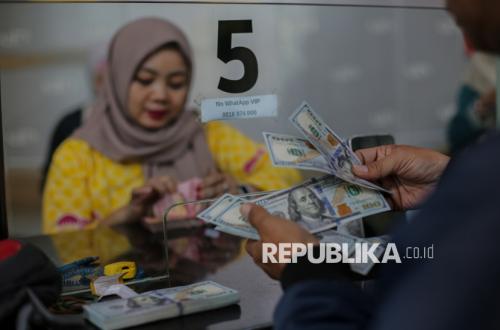
JAKARTA — The rupiah weakened against the US dollar in early trading on Wednesday, following the release of US Consumer Price Index data for October 2026.
Bank Woori Saudara analyst Rully Nova said the rupiah had weakened in response to the data, with the Indonesian currency affected by global sentiment originating in the United States.
“Rising inflationary pressure, with US CPI at 0.4% in October and 0.3% excluding food and energy, pushed up the dollar index and US bond yields, spilling over into weakness in emerging-market bond markets, including Indonesia,” he told ANTARA in Jakarta on Wednesday (11 October 2026). His comments explained the external pressure facing domestic financial markets.
The rupiah opened trading on Wednesday down 52 points, or 0.29%, at Rp18,114 per US dollar, compared with the previous close of Rp18,062.
Xinhua reported that consumer prices rose more than expected in October, while core inflation remained firm for the third consecutive month. This fuelled concern that price pressures were broadening and sent short-term US Treasury yields sharply higher.
Bond markets sold off after the Consumer Price Index data was released. The two-year Treasury yield surged by about 15 basis points to above 4.7%, its biggest daily increase since early April 2025.
The 10-year yield, meanwhile, rose to around 4.93%. These moves in global financial instruments also prompted foreign investors to adjust their portfolios.
Markets are now pricing in an interest-rate increase in December, with a 50-basis-point rise assigned a probability of nearly 15%, up from the previous week.
Domestic sentiment was also affected by political uncertainty, as calls for Indonesian Vice-President Gibran Rakabuming Raka to be removed from office put pressure on the rupiah. Domestic political conditions have become a focus for market participants.
“Investors are concerned about growing public dissatisfaction with the government’s performance, as well as the shrinking middle class,” Rully said. The country’s economic fundamentals are also being tested by evolving social and political dynamics.
In addition, the 2026 economic growth projection of 5.7% is expected to be missed amid political uncertainty and demonstrations. The macroeconomic outlook warrants close attention from the relevant authorities.
“This is likely to continue into next year,” he said. The government and other stakeholders are expected to contain uncertainty to preserve national economic stability.