
Rupiah Remains Under Pressure as US Dollar Exchange Rate Surges to Rp17,280
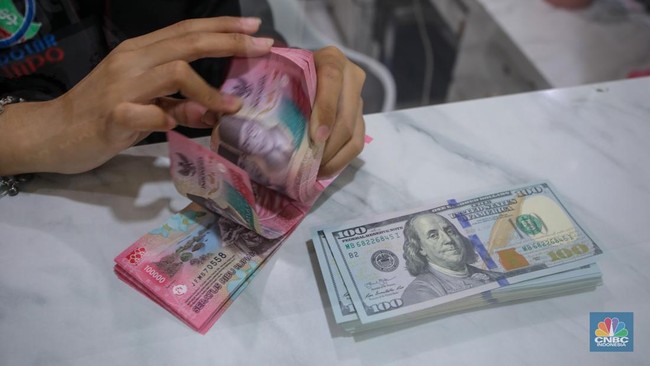
Jakarta, CNBC Indonesia - The rupiah exchange rate closed at an all-time low against the US dollar on Thursday’s trading (23/4/2026). According to Refinitiv data, the rupiah ended trading at Rp17,280/US, depreciating0.64. Pressure on the rupiah continued to build as the day progressed. The Garuda currency even touched Rp17,320/US$ before slightly trimming its losses by the close. Meanwhile, the US dollar index (DXY) at 3:00 PM WIB was still in the green, up 0.07% to 98.658. The rupiah’s weakening throughout the day’s trading occurred alongside rising tensions in the Middle East, which once again drove demand for the US dollar. The dollar strengthened towards its highest level in about one and a half weeks, amid the impasse between Iran and the United States and no significant progress in peace negotiations. These tensions also pushed oil prices back above US$100 per barrel, weighing on global market sentiment. The situation heated up after Tehran seized two ships in the Strait of Hormuz on Wednesday, while US President Donald Trump extended the ceasefire with Iran without certainty on when peace talks would resume. The two sides remain divided on several key issues, from the ceasefire, blockade, nuclear issues, to control over the Strait of Hormuz. As a result, this strategic route remains effectively disrupted, triggering energy shocks that pressure the global economy. BCA Chief Economist David Sumual explained that the rupiah’s collapse today was still triggered by negative market sentiment towards the dynamics of the Middle East conflict, as well as fluctuating oil prices. In addition, pressure on the rupiah was exacerbated by high domestic demand for US dollars, coinciding with the seasonal dividend payment period. “Besides oil price issues and the Middle East situation, there is also seasonal demand for dividend payments,” David told CNBC Indonesia on Thursday (23/4/2026). Meanwhile, Mirae Asset Sekuritas Chief Economist and Research Rully Arya Wisnubroto assessed that this movement also reflects Bank Indonesia’s more measured approach to stabilising the exchange rate. According to him, BI is now intervening in the foreign exchange market more cautiously to prevent Indonesia’s foreign exchange reserves from being eroded too deeply.