
Rupiah Remains Steady Below 18,000 Level, Here's the Analysis
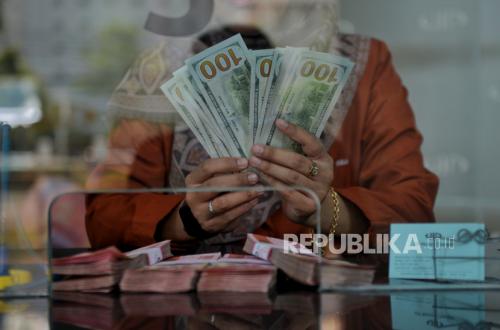
The rupiah’s exchange rate against the US dollar has moved below the 18,000 level for nearly a week. As of Wednesday (12/8/2026), it was trading around 17,870 per US dollar, influenced by various external and internal sentiments.
Citing the Jakarta Interbank Spot Dollar Rate (Jisdor) from Bank Indonesia (BI), the rupiah was at 18,088 per US dollar on Tuesday (28/7/2026), following the announcement of BI Governor Perry Warjiyo’s resignation on Monday (27/7/2026). On Wednesday (29/7/2026), it moved to 18,087 per US dollar, then to 18,078 on Thursday (30/7/2026), and reached 18,058 on Friday (31/7/2026).
On Monday (3/8/2026), the Garuda currency was at 17,991 per US dollar and briefly touched 18,037 on Tuesday (4/8/2026). Subsequently, the rupiah consistently stayed below 18,000 per US dollar, albeit with fluctuations. It was at 17,937 on Wednesday (5/8/2026), 17,919 on Thursday (6/8/2026), and 17,913 on Friday (7/8/2026). The rupiah continued to fluctuate, reaching 17,795 on Monday (10/8/2026), 17,824 on Tuesday (11/8/2026), and moving to 17,876 on Wednesday (12/8/2026).
Meanwhile, according to Bloomberg, the rupiah weakened 16 points or 0.09 percent to 17,877 per US dollar, compared to the previous trade at 17,861 per US dollar.
Currency and commodity analyst Ibrahim Assuaibi explained several factors influencing the rupiah’s movement. Externally, these range from the dynamics of the Middle East conflict to the condition of the US economy. “The ongoing tension between the US and Iran regarding the reopening of the Strait of Hormuz has kept shipping activity through the strait minimal, as little progress has been made towards an agreement, especially after Washington stated it had attacked a ship in the Gulf of Oman suspected of heading to Iran,” Ibrahim said in a statement on Wednesday (12/8/2026).
Tehran had previously signalled that the Strait of Hormuz would remain closed unless Washington met their compensation demands, a demand firmly rejected by President Donald Trump. The Strait of Hormuz is a major point of uncertainty for oil markets, as it supplied about 20 percent of the world’s oil before the conflict erupted. Adding to supply disruption concerns, the Houthi group continued attacks on ships in the Red Sea and the Bab el-Mandeb Strait this week, after the Iran-backed group announced a naval blockade against Saudi Arabia. “This week’s developments show minimal signs of easing conflict in West Asia, keeping traders alert to the potential for further oil supply disruptions, which in turn supports crude oil prices,” he explained.
On the other hand, Ibrahim noted that US economic data updates also influenced the rupiah, particularly the Consumer Price Index (CPI) and Producer Price Index (PPI) figures. “Investors are now awaiting US CPI data on Wednesday, followed by producer price data on Thursday. A lower-than-expected figure could reduce pressure on the Fed to tighten policy, while a higher figure could reignite expectations of an interest rate hike. Market participants tend to hold back from taking aggressive positions ahead of the CPI release, with swap markets pricing in a roughly 50-50 chance of a quarter-point rate hike in September,” he clarified.