
Rupiah Recovers Strength, US Dollar Closes Below Rp17,000
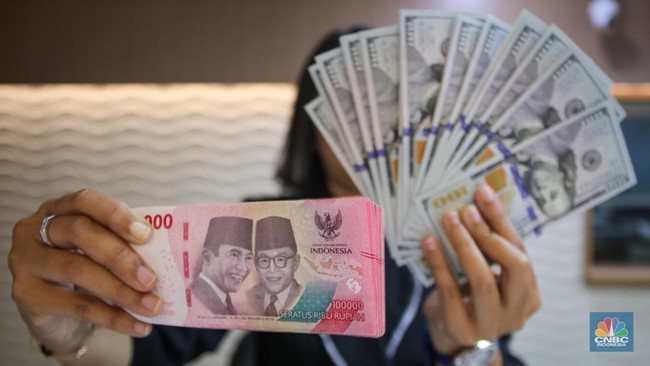
Jakarta, CNBC Indonesia — The rupiah exchange rate successfully turned the tide and closed stronger against the US dollar on Wednesday (1/4/2026) trading. According to Refinitiv data, the Garuda currency ended the day’s trading in the green with a 0.09% appreciation to the level of Rp16,975/US.However, duringintradaytrading, therupiahbrieflybreachedthepsychologicallevelofRp17, 000/US. It even touched Rp17,026/US, whichbecametheweakestlevelinhistoryonanintradaybasis.Thismarkedthefirsttimetherupiahbreachedthatcruciallevelinthespotmarket.Nevertheless, afterfacingpressureatthestartoftrading, therupiahmanagedtoreversecourseandclosedbelowthepsychologicallevelofRp17, 000/US. Meanwhile, the US dollar index (DXY) at 3:00 PM WIB was observed continuing its weakening with a 0.32% drop to 99.630. The rupiah’s fairly volatile movement today was influenced by a combination of external and domestic sentiments. Global Markets Economist at Maybank Indonesia, Myrdal Gunarto, stated that the pressure on the rupiah is still closely related to the stance of global investors who tend to be risk-averse towards emerging market assets like Indonesia amid the war in the Middle East and persistently high crude oil prices. This condition has held back foreign capital flows to the domestic market, even accompanied by selling actions and profit-taking. At the same time, domestically, pressure also comes from rising foreign exchange demand for import needs, particularly fuel imports, early-month routine spending, dividend season, and the shift in foreign debt payments after the Eid al-Fitr holiday. “Regarding the rupiah exchange rate movement, I think this is still closely related to developments from the global investor behaviour side, who are still engaging in risk-averse actions for investments in emerging markets like Indonesia,” Myrdal told CNBC Indonesia on Wednesday (1/4/2026). A similar view was expressed by BCA Chief Economist Davidi Sumual. According to him, the pressure on the rupiah today is still largely triggered by external factors, particularly the rise in global crude oil prices due to the ongoing war in the Middle East, which continues to trigger concerns in financial markets. However, he assesses that this pressure is also starting to spill over into domestic sentiment, particularly regarding its potential impact on the state budget (APBN). “So it’s still about negative external sentiments like rising oil prices and concerns about their impact on the APBN. There is quite strong selling pressure from foreigners in the government bond market,” Davidi told CNBC Indonesia on Wednesday (1/4/2026). Despite the large negative sentiment, market players still see room for stabilisation, especially when external pressures begin to ease slightly and the US dollar also corrects.