
Rupiah Rebounds as US Dollar Falls to Rp18,040
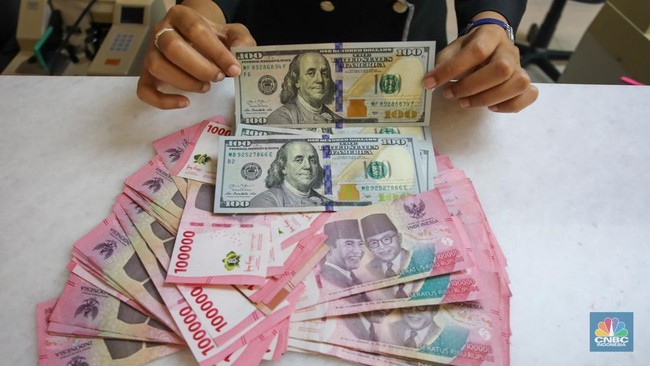
Jakarta, CNBC Indonesia — The rupiah ended the final trading session of the week in positive territory. The Indonesian currency strengthened slightly against the US dollar, reversing its decline in the previous session.
Refinitiv data showed the rupiah closed 0.03% higher at Rp18,040 per US dollar on Friday (23 October 2026), after falling 0.25% at Thursday’s close (22 October 2026).
During the day, the rupiah traded in a range of Rp18,040 to Rp18,080 per US dollar. It gained 40 points from its weakest level and finished at the strongest level of the session.
Meanwhile, the US dollar index (DXY), which measures the greenback against six major currencies, was up 0.19% at 101.802 at 9am Western Indonesia Time (WIB).
Despite closing higher, the rupiah remains under pressure from both external and domestic factors. Bank Indonesia (BI) says these factors continue to affect investors’ willingness to place funds in Indonesia’s financial markets.
Firman Mochtar, head of BI’s Monetary Economics Policy Department, said rising US government bond yields, particularly on 10-year Treasuries, are making dollar-denominated assets more attractive to investors.
This could reduce investors’ interest in placing funds in emerging markets, including Indonesia, while supporting the US dollar.
“The impact is that the DXY, the dollar currency index against developed economies, has strengthened. Yesterday it was recorded at 101,” Firman said at a media briefing at BI headquarters in Jakarta on Friday (23 October 2026).
The dollar’s strength against several major currencies is also putting additional pressure on emerging-market currencies.
“When it strengthens, emerging-market currencies weaken, including Indonesia’s,” he added.
Domestically, Firman said developments concerning MSCI were also influencing the rupiah. MSCI has opened a consultation on a possible reclassification of Indonesia’s stock market from Emerging Market to Standalone Market.
The plan, which remains at the consultation stage, is affecting investor perceptions of domestic financial markets and adding pressure to foreign capital flows.
“So, there are capital outflows, global pressures and domestic pressures. Overall, these are putting pressure on the rupiah exchange rate. That is what is happening,” Firman said.
Source: jawawa.id (https://jawawa.id/newsitem/rupiah-rebounds-as-us-dollar-falls-to-rp18-040-1792745469)
Originally published by CNBC Indonesia (https://www.cnbcindonesia.com/market/20261023144726-17-778949/rupiah-berbalik-menguat-dolar-as-turun-ke-rp18040), translated from Indonesian