
Rupiah Plunges to Rp 17,394 per US Dollar as Indonesia Records Trade Surplus
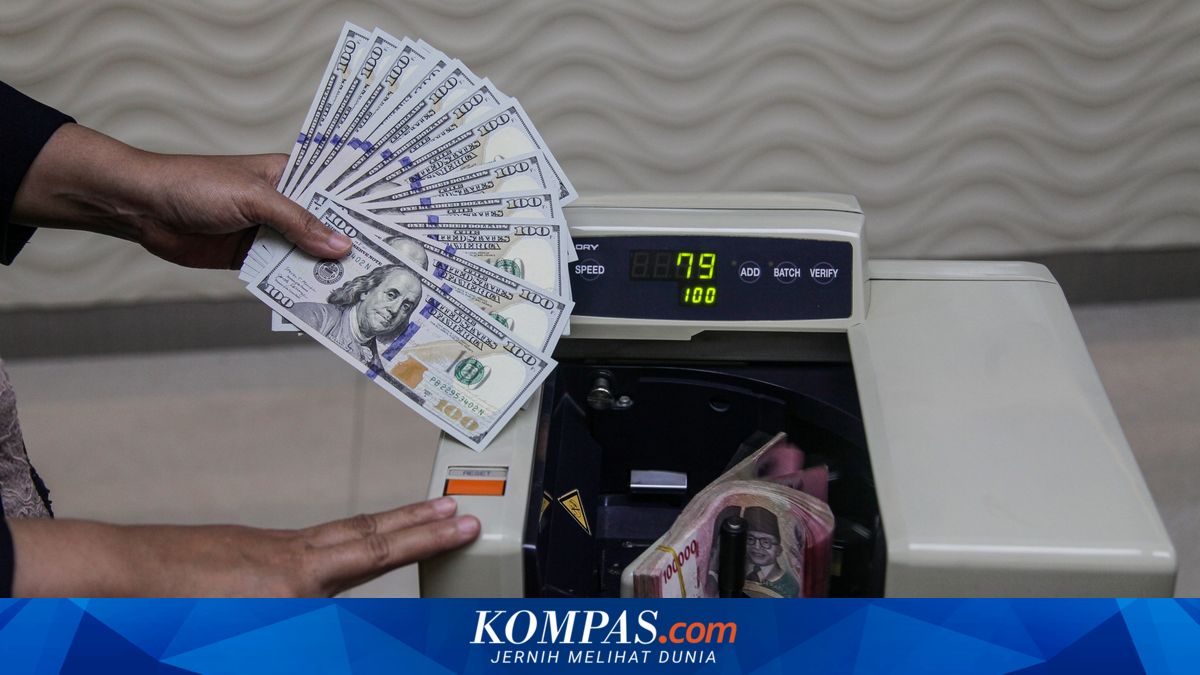
JAKARTA - The rupiah exchange rate in the spot market weakened at the close of trading on Monday (4/5/2026). The Garuda currency fell 0.33% to Rp 17,394 per US dollar.
The rupiah’s weakening occurred as Indonesia recorded a trade surplus. Cumulatively from January to March 2026, the trade surplus reached $5.55 billion, extending the surplus trend to 71 consecutive months since May 2020.
The Central Statistics Agency (BPS) reported that Indonesia’s trade balance in March 2026 recorded a surplus of $3.32 billion, an increase from February 2026’s $1.27 billion.
This surplus was supported by exports worth $22.53 billion, despite a 3.10% year-on-year decline. Meanwhile, imports were recorded at $19.21 billion, up 1.51%.
In detail, the surplus came from the non-oil and gas sector at $5.21 billion, with major commodities including vegetable and animal oils and fats, mineral fuels, and iron and steel. On the other hand, the oil and gas sector still recorded a deficit of $1.89 billion from crude oil, oil products, and gas.
However, pressure is starting to show in the manufacturing sector. Data from the Purchasing Managers’ Index (PMI) released by S&P Global showed Indonesia’s PMI at 49.1 in April 2026, dropping into contraction territory.
This figure is the lowest since July 2025 and marks the first contraction after eight consecutive months of expansion. The decline was triggered by weakening production volumes for two consecutive months, with the rate of decline accelerating and becoming the deepest since May last year.
US President Donald Trump previously stated that his side would begin efforts to free ships stranded in the Strait of Hormuz. In his statement on Truth Social on Sunday, Trump said this step was taken to maintain smooth trade activities.
Trump also emphasised that a nuclear deal with Tehran is a priority, while Iran proposed postponing nuclear issue discussions until the conflict subsides, on the condition that both sides lift shipping blockades in the Gulf region.
“Trump has made a nuclear deal with Tehran a priority, while Iran has proposed setting aside the nuclear issue until after the war ends and both sides agree to lift conflicting shipping blockades in the Gulf,” said Ibrahim to reporters on Monday afternoon.
In Eastern Europe, conflict is also escalating after Ukraine launched a series of drone attacks on Russian territory on Sunday. The attacks struck the Primorsk port in the Baltic Sea, causing it to catch fire, and targeted several ships and energy infrastructure.
Ukrainian President Volodymyr Zelenskiy stated that the attacks caused significant damage to the oil terminal at the port. In addition, the attacks were reported to have hit an oil tanker, a Russian Karakurt-class small missile ship, and a patrol boat in the Baltic Sea.