
Rupiah Plummets, Apindo: This Poses Heavy Pressure on Indonesian Manufacturing
The General Chair of the Indonesian Employers Association (Apindo), Shinta Kamdani, stated that the weakening of the rupiah exchange rate, which has now touched a new psychological level of Rp 17,600 per US dollar, is a major concern for the business community. She emphasised the need for a serious and coordinated response, as the rupiah continues to hit new all-scale lows in parallel with global trends.
“However, it must be understood that this pressure does not exist in isolation, but is part of broader global dynamics,” Shinta said in a statement received in Jakarta on Monday (18/5/2026).
She noted that the rise in US Treasury yields, triggered by the need for US fiscal financing and escalating geopolitical conflicts, has driven global capital reallocation towards US dollar assets. Shinta stated that this condition is impacting almost all emerging economies, including Indonesia, through exchange rate pressure and increased capital outflows.
“In this context, it must also be seen that the ongoing pressure is not temporary, but has the potential to continue as long as global factors remain unresolved,” Shinta continued.
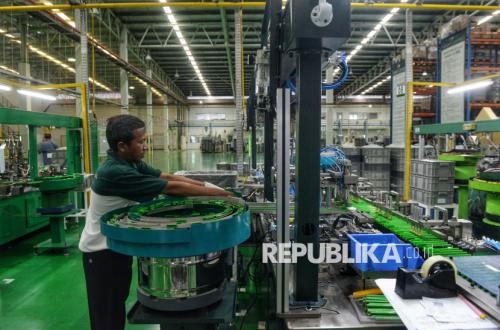
For the business world, she added, this situation is viewed as an external shock that intensifies pressure on corporate cost structures and cash flows. Shinta noted that the weakening rupiah directly increases import costs, particularly because the national industrial structure remains heavily dependent on foreign raw materials.
“Currently, approximately 70 per cent of manufacturing raw materials are imported, with raw materials contributing about 55 per cent to the production cost structure,” Shinta added.
Consequently, she continued, every depreciation of the rupiah is directly reflected in an increase in input costs in rupiah terms. In this context, the burden of importing raw materials is affected relatively quickly, although the level of pass-through to final prices varies depending on the sector and demand conditions.
Shinta explained that the most vulnerable sectors are industries with high import dependency, such as petrochemicals, plastics, food and beverages, pharmaceuticals, and energy-based manufacturing. For example, the price of naphtha, a primary raw material for the plastics industry, has risen significantly, driving resin prices up by tens of per cent, which subsequently creates a chain reaction in the packaging industry and other downstream sectors.
“This indicates cost-push inflation pressure that is not limited to a single sector but has a wide transmission effect across the entire supply chain,” Shinta revealed.
On the other hand, pressure is also felt from the corporate finance aspect. She stated that the strengthening of the US dollar increases the burden of foreign currency obligations, both in terms of interest payments and principal debt.
“This impacts cash flow management and increases the company’s risk profile,” she continued.
In a condition where purchasing power has not yet fully recovered, Shinta said the room for price adjustments is limited, meaning part of the cost pressure must be absorbed by businesses. This subsequently squeezes margins and affects decisions regarding expansion and labour absorption.
“In response to this condition, the business community is essentially adjusting strategies towards a more prudent and risk-adjusted approach,” said Shinta.
Shinta stated that the approach currently being adopted is ‘selective growth’, where expansion is still carried out but more selectively, considering demand visibility, cost efficiency, and the certainty of return on investment. Meanwhile, investments that are more speculative or highly dependent on external conditions tend to be postponed.
As an anticipatory measure, she added, companies are also strengthening their risk management strategies more comprehensively. Shinta encouraged an increase in the use of hedging instruments against exchange rate fluctuations, accompanied by restructuring debt to ensure a better balance between rupiah and foreign currency. Operationally, the focus is directed towards efficiency through the rationalisation of capital expenditure (capex), optimisation of working capital, and increased productivity.
“Furthermore, supplier diversification and efforts towards import substitution are being undertaken, although we see that domestic substitution capacity is still limited in many sectors,” she added.
In other words, she said, while there is room for adaptation, it is not entirely capable of offsetting the magnitude of the current external pressures. Shinta noted that external pressures remain quite strong and the room for policy easing is relatively limited in the future, making synergy between monetary, fiscal, and real sector policies crucial.
“The business community remains committed to maintaining resilience while selectively capturing opportunities. With a measured approach and strong policy collaboration, we believe stability can be maintained and economic activities can continue sustainably amidst the ongoing global uncertainties,” said Shinta.