
Rupiah Plummets: 1 Singapore Dollar at Rp14,000, 1 Ringgit at Rp4,500
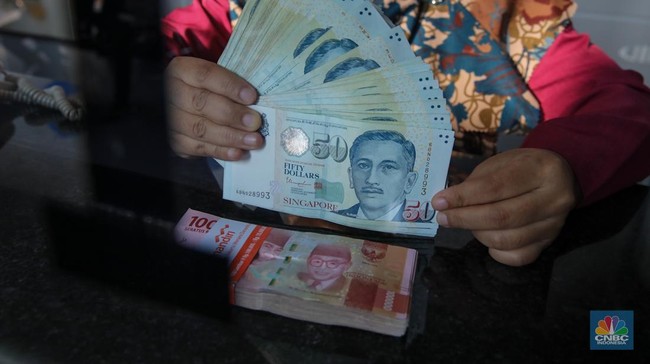
The rupiah has officially hit its weakest level in history and a new psychological threshold against the Singapore dollar. According to Refinitiv data, the rupiah weakened 0.52% to Rp14,000 per SGD, marking the first time in history it has touched this level. Pressure on the rupiah against the Singapore dollar has intensified in recent months. At the end of 2025, the SGD/IDR rate stood at Rp12,957.64, meaning the rupiah has weakened by approximately 7.97% year-to-date. The rupiah has also weakened significantly against other regional currencies, particularly the Malaysian ringgit. Refinitiv data shows the rupiah fell 1.01% against the ringgit as of 9:47 AM WIB, trading at Rp4,502.95 per MYR. This marks the first time the rupiah has breached the psychological threshold of Rp4,500 per MYR, setting a new historical low against the Malaysian currency. The rupiah’s depreciation against the ringgit has been ongoing in recent months. Year-to-date, the rupiah has weakened 9.91% against the ringgit. At the end of 2025, the exchange rate was Rp4,097.04 per MYR. Pressure intensified in May 2026, with the rate at Rp4,343.24 on 1 May. Within less than 30 days, the rupiah depreciated by 3.68% against the ringgit. Why is the Ringgit Strengthening? The ringgit’s strength against the rupiah stems from Malaysia’s robust trade balance. According to Malaysia’s Department of Statistics (DOSM), total trade in March 2026 grew 9.3% year-on-year to MYR273.0 billion, equivalent to approximately Rp1.188 trillion at an exchange rate of Rp4,352 per MYR. This surpasses the MYR249.8 billion recorded in the same period last year. The growth was driven by increases in both exports and imports. Malaysia’s exports rose 8.3% to MYR148.8 billion, while imports grew 10.4% to MYR124.2 billion. Despite this, the country recorded a trade surplus of MYR24.6 billion in March 2026, though slightly narrower by 0.9% compared to the previous year. This trade surplus is a key factor supporting the ringgit. Strong exports and healthy trade flows help maintain foreign exchange supplies, contributing to currency stability. Mohd Afzanizam Abdul Rashid, Chief Economist at Bank Muamalat Malaysia Bhd, stated Malaysia’s economy remains resilient. Preliminary estimates indicate Q1 2026 GDP growth exceeding 5%. He also noted recent international trade data shows Malaysia’s nominal exports grew 12.7% in Q1 2026, higher than the 11.0% growth in the previous quarter. “Thus, Malaysia’s economy is well-positioned to handle current challenges from rising oil prices due to the Iran conflict,” said Mohd Afzanizam, quoted by Bernama. While Malaysia’s economy remains robust, the ringgit has also benefited from sustained foreign investor confidence. This contrasts with Indonesia, where domestic markets face challenges directly impacting investor perceptions of the national economic outlook. A key concern is fiscal management. The government’s large-scale programs have led investors to closely monitor public spending and the government’s ability to maintain fiscal discipline. Furthermore, the 2025 budget deficit reached 2.92% of GDP, nearing the legal maximum of 3% set by law. This has made markets increasingly sensitive to Indonesia’s fiscal policy direction. Amid persistent global pressures, investor confidence remains crucial for the rupiah’s stability.