
Rupiah Opens Weaker at Rp17,930 per US Dollar Amid Strong Greenback
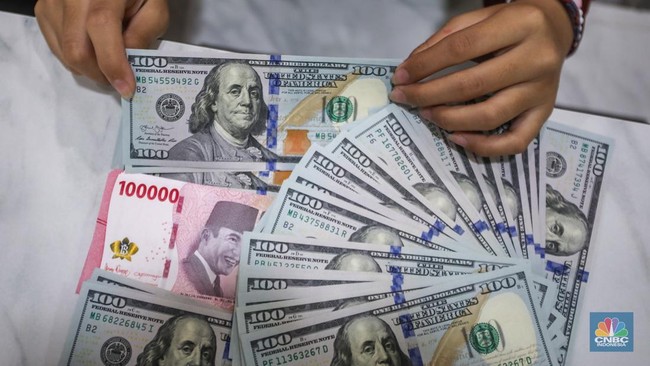
Jakarta, CNBC Indonesia — The rupiah opened weaker against the US dollar in trading on Friday (24/7/2026), ahead of the close of the week’s trading.
According to Refinitiv, the rupiah opened depreciating 0.22% to Rp17,930/US.Intheprevioussession, theGarudacurrencyclosed0.08.
Meanwhile, the US dollar index (DXY), which measures the greenback’s strength against six major world currencies, was down 0.06% at 101.392 as of 09.00 WIB. This slight decline came after the DXY strengthened 0.32% in Thursday’s (23/7/2026) trading.
The rupiah’s movement heading into the weekend remains shadowed by US dollar dynamics in the global market. Although slightly corrected this morning, the DXY remains near its highest level in three weeks after breaking back above the 101 mark.
The dollar’s earlier strength was underpinned by a surge in oil prices and rising US Treasury yields. Both sentiments have revived concerns that global inflationary pressures will persist for longer.
Global oil prices at Thursday’s (23/7/2026) close broke back above US$100 per barrel for the first time since May. The increase came after Yemen’s Houthi group attacked two Saudi Arabian oil tankers in the Red Sea.
The attack means the war in the Middle East has begun to threaten two of the world’s main oil trade routes at once, namely the Strait of Hormuz and the Bab el-Mandeb Strait. US President Donald Trump has also promised major military punishment against Iran and the Houthi group.
Inflationary pressure has also come from US trade policy. The Trump administration will impose new tariffs of 10% and 12.5% on goods from 60 trading partners accused of being weak in enforcing bans on the use of forced labour.
Indonesia is among the group of countries subject to a 10% tariff. The tariff also applies to goods from several other countries, such as India, Malaysia, Canada, the United Kingdom, Mexico, Pakistan, and Bangladesh.
The new tariffs replace the temporary 10% global tariff that expires this Friday. The US government previously asserted that for countries that already have trade agreements with Washington, the tariffs will not cause import duties to exceed the agreed limits.
Rising oil prices and global trade tensions have reignited concerns about inflation. This has driven up US Treasury yields and kept the appeal of US dollar-denominated assets intact, which in turn could limit room for other currencies to strengthen, including the rupiah.