
Rupiah Opens Weaker at Rp 17,988 Despite BI Reporting Rise in June Foreign Reserves
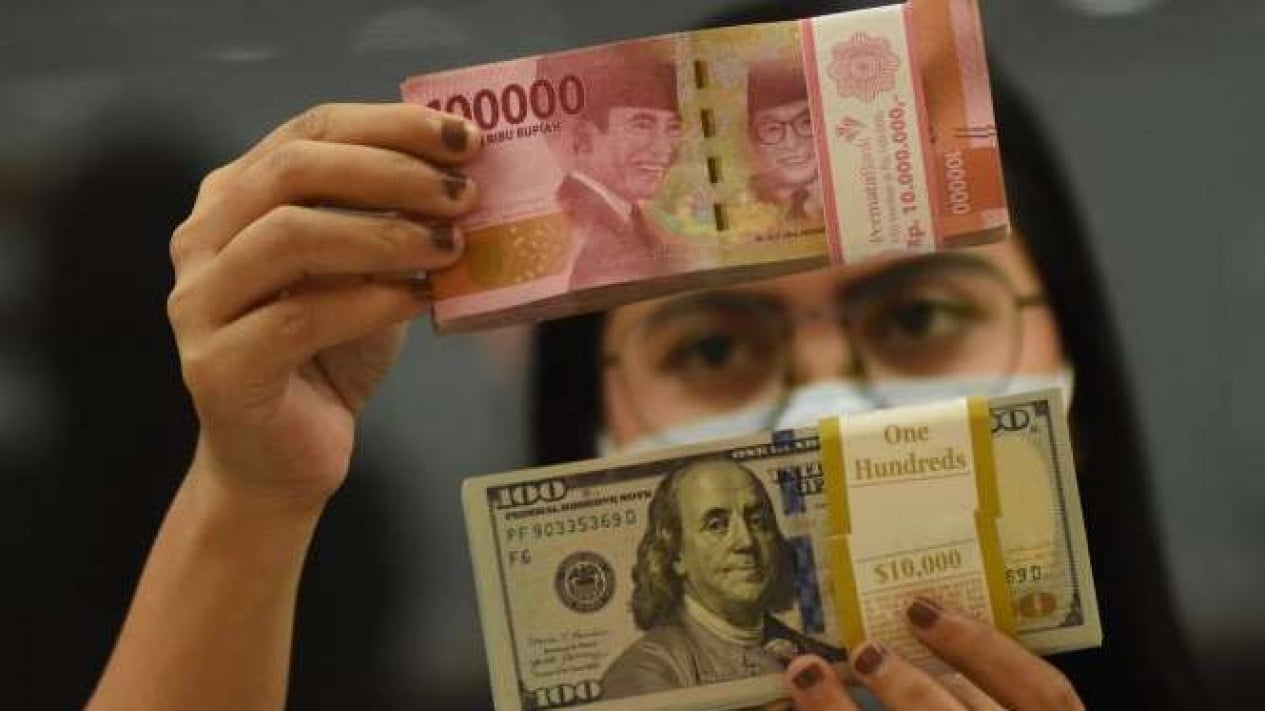
The exchange rate of the rupiah against the US dollar is predicted to remain volatile, although it closed stronger in today’s trading.
Based on Bank Indonesia’s Jakarta Interbank Spot Dollar Rate (Jisdor) data, the rupiah exchange rate against the US dollar stood at the level of Rp 17,988 on Tuesday, 7 July 2026. This position represents an 11-point strengthening from the previous rate of 17,999 on Monday, 6 July 2026.
Meanwhile, in spot market trading on Wednesday, 8 July 2026, up to 09:03 WIB, the rupiah was traded at Rp 17,988 per US dollar. This position weakened by 8 points or 0.04 percent from the previous level of Rp 17,980 per US dollar.
Lukman Leong, an analyst at Doo Financial Futures, stated that the rupiah’s strength was triggered by data showing an increase in foreign exchange reserves at the end of June 2026.
“The rupiah strengthened in response to foreign exchange reserve data, which rose for the first time in six months,” said Lukman, as quoted on Wednesday, 8 July 2026.
Bank Indonesia (BI) reported that Indonesia’s foreign exchange reserve position at the end of June 2026 reached US$145.6 billion, a slight increase of US$700 million from the end-May 2026 position of US$144.9 billion.
“The development of the foreign exchange reserve position in June 2002 was primarily driven by tax and service revenues,” said Leong.
On the other hand, this development occurred amidst the government’s foreign debt payments and Bank Indonesia’s exchange rate stabilisation policies in response to high uncertainty in global financial markets.
The foreign exchange reserve position at the end of June 2026 was equivalent to 5.5 months of imports, or 5.4 months of imports and government foreign debt payments, and remained above the international adequacy standard of approximately 3 months of imports.
However, according to Leong, investors tend to remain in a ‘wait and see’ mode to anticipate upcoming domestic economic data (Wednesday and Thursday), specifically retail sales and the consumer confidence index.
“The US dollar index itself was observed to be range-bound, with investors waiting for the minutes of the Federal Open Market Committee (FOMC) meeting,” he added.