
Rupiah Opens Weaker as US Dollar Rises to Rp17,970
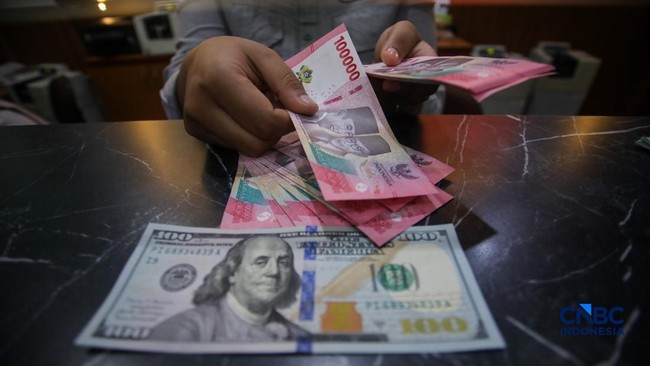
The rupiah exchange rate was once again under pressure against the US Dollar at the opening of trading on Tuesday (29/09/2026). The ‘Garuda’ currency continued the sharp depreciation experienced the previous day.
According to Refinitiv data, the rupiah began today’s trading with a slight decline of 0.03% to the position of Rp17,970/US, movingclosertoitspsychologicallevelofRp18, 000/US.
This weakness follows the movement on Monday (28/09/2026), when the rupiah depreciated by 0.48% and ended trading at the level of Rp17,965/US$.
Meanwhile, the US Dollar Index (DXY), which measures the strength of the greenback against six major world currencies, was observed to have strengthened slightly by 0.01% to 101.209 at 09:00 WIB. This strengthening follows a 0.22% increase in the DXY at the close of the previous trading session.
Pressure on the rupiah occurred as the US Dollar continued to move strongly in the global market. Amidst these conditions, the Governor of Bank Indonesia (BI), Destry Damayanti, emphasised the importance of synergy between monetary and fiscal policies to maintain exchange rate stability.
From a monetary perspective, BI is stabilising the rupiah through interventions in the spot market, non-deliverable forward (NDF), and domestic non-deliverable forward (DNDF) markets.
BI is now reducing its proportion of intervention through the spot market because such transactions involve direct dollar sales, which can deplete foreign exchange reserves. The proportion of spot intervention currently accounts for only about 30% of BI’s total interventions.
“It is approximately 30% of the total interventions we conduct. Interventions occur in the DNDF, NDF, and spot markets,” stated Destry during a working meeting with Commission XI of the House of Representatives (DPR) on Monday (28/09/2026).
Previously, BI interventions were more heavily conducted through the spot market. However, the development of the DNDF and NDF markets means these two instruments are now considered more effective at dampening pressure on the rupiah without placing excessive burden on foreign exchange reserves.
Nevertheless, Destry acknowledged that pressure on the rupiah does not only stem from financial market movements. There are fundamental and structural issues that require coordination with the government, particularly through the Ministry of Finance and the Financial System Stability Committee (KSSK).
Therefore, rupiah stabilisation must be accompanied by strengthening the export of goods and services as well as increasing investment. Such steps are necessary to expand the domestic supply of foreign exchange.
BI and the government also continue to discuss various programmes to boost exports and attract investment, including both direct and portfolio investment. This synergy is expected to strengthen rupiah stability amidst high pressure from the US Dollar.