
Rupiah Opens Stronger This Morning, US Dollar Falls to Rp17,940
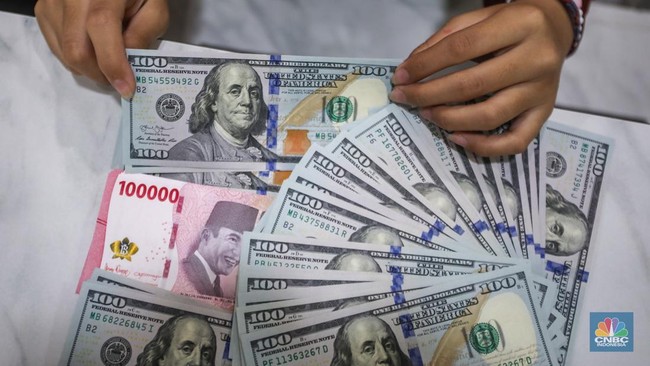
The rupiah exchange rate successfully began trading towards the end of the week with gains against the United States (US) dollar.
According to Refinitiv data, the Garuda currency at the opening of trading on Friday (3/7/2026) strengthened by 0.27%, appreciating to the level of Rp17,940/US$.
This strengthening reverses the rupiah’s position at the close of the previous trading session. On Thursday (2/7/20226), the rupiah closed weaker by 0.32% at the position of Rp17,988/US$.
Meanwhile, the US dollar index (DXY), which measures the strength of the greenback against six major world currencies, was observed to have weakened by 0.05% to the level of 100.803 as of 09:00 WIB.
The movement of the rupiah in the final trading session of the week is expected to still be influenced by external factors, particularly the dynamics of the US dollar in the global market, which is currently under pressure.
The greenback weakened this morning, continuing a sharp correction from the previous trading session. The DXY previously closed down 0.53%, alongside easing market expectations regarding the possibility of US central bank (The Federal Reserve/The Fed) interest rate hikes in the near future.
The weakening of the US dollar indicates that selling pressure on greenback-denominated assets has begun to increase. This condition provides more room for the strengthening of other currencies, including the rupiah.
Pressure on the US dollar emerged after United States labour data showed signs of cooling. US job growth in June was recorded to have slowed more deeply than expected, while payroll increases for the two previous months were also revised lower.
This data has led the market to re-evaluate the likelihood of Fed interest rate hikes for the remainder of this year. Throughout June, the US economy added only 57,000 jobs, far below the market expectation of 110,000 jobs.
With weaker labour data, expectations for near-term interest rate hikes have also subsided. This has ultimately pressured the US dollar and provided space for the rupiah to open trading in the green zone.