
Rupiah Opens Strong, US Dollar Falls to Rp17,950
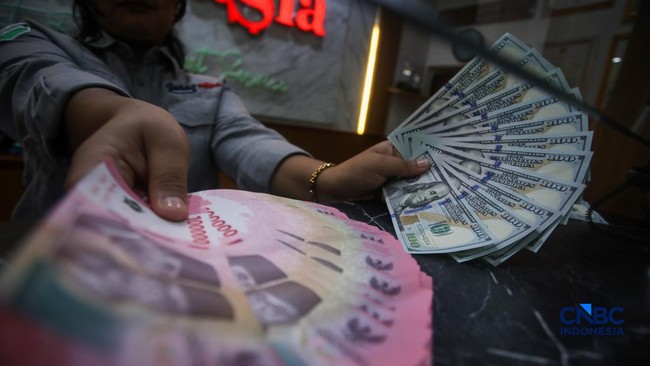
The rupiah exchange rate managed to start this week’s trading in positive territory against the US dollar. According to Refinitiv data, at the opening of trading on Monday (3/8/2026), the rupiah appreciated by 0.22% to a position of Rp17,950/US.Thisstrengtheningcontinuedthepositivemomentumfromtheprevioustradingsession.OnFriday(31/7/2026), theGarudacurrencyclosedup0.47 and managed to move back below the psychological level of Rp18,000/US$. Meanwhile, the US dollar index (DXY), which measures the greenback’s strength against six major world currencies, was observed to have weakened by 0.22% to 99.697 at 09.00 WIB. The rupiah’s movement at the start of the week is expected to be influenced by both domestic and external sentiment. Externally, the currency received a boost from the weakening US dollar index. Pressure on the greenback occurred after Japan and the US conducted a joint intervention in the foreign exchange market to support the yen, which was near its weakest level in 40 years. Japan’s Ministry of Finance confirmed the joint yen-buying intervention on Friday last week. Bank of Japan data also indicated that Japan likely bought yen worth US$58.97 billion on Thursday. The move pushed the yen up 1% to touch 156.01 per dollar in Asian trading this morning. Over the last two trading days of the previous week, the yen had surged more than 3%. The strengthening yen weighed on the dollar. The DXY was recorded to have slumped more than 1.5% throughout the previous week and moved back below the 100 level in trading this morning. In addition, market participants are awaiting the announcement of July 2026 inflation data by the Central Statistics Agency (BPS) today. A market consensus compiled by CNBC Indonesia from 12 institutions estimates that the Consumer Price Index (CPI) experienced inflation of 0.11% on a monthly basis in July. On an annual basis, inflation is estimated to reach 3.2%. Meanwhile, core inflation is projected to be at 2.77% annually. In June, Indonesia recorded monthly inflation of 0.44% and annual inflation of 3.34%. Core inflation was recorded at 2.76% annually, while the group of government-administered prices experienced inflation of 1.41% on a monthly basis. The polling results indicate that headline inflation is expected to ease both on a monthly and annual basis. In contrast to headline inflation, core inflation is projected to rise slightly compared to the previous month. The easing of inflationary pressure is mainly supported by a decline in the prices of several food commodities. The Office of Chief Economist at Bank Mandiri estimates that the volatile food group experienced deflation of 1.12% on a monthly basis, reversing from inflation of 0.14% in June. The team wrote that the decline in volatile food prices was primarily driven by a fall in the prices of red chillies and shallots after entering the peak harvest season. The July inflation data will be one of the considerations for Bank Indonesia in determining the future direction of monetary policy. In addition to inflation, the central bank will also closely monitor rupiah stability, global economic developments, and capital flows before making a decision on interest rates.