
Rupiah Opens Slightly Stronger, US Dollar Still at Rp18,060
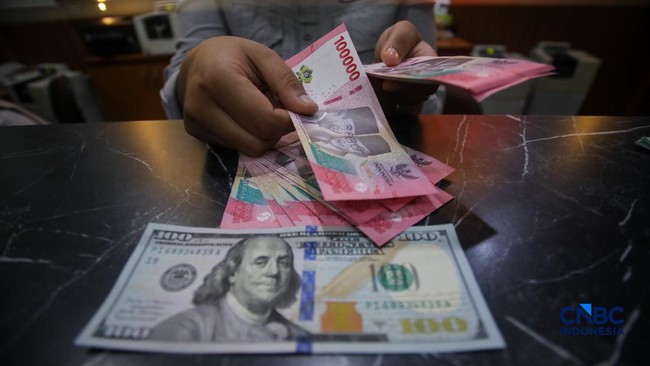
Jakarta, CNBC Indonesia – The rupiah opened stronger against the US dollar in the final trading session of the week on Friday (10/7/2026). The gain came after the rupiah had previously touched its weakest position in a month.
According to Refinitiv data, the rupiah opened stronger at Rp18,060/US$, a slight appreciation of 0.06%.
This reversed the rupiah’s position at the previous close on Thursday (9/7/2026), when the Garuda currency closed sharply lower by 0.44% at Rp18,070/US$ – its weakest level in a month.
Meanwhile, the US dollar index (DXY), which measures the greenback’s strength against six major world currencies, was down 0.14% at 100.762 as of 09.00 WIB.
The rupiah’s movement today received fresh impetus from the weakening US dollar index in global markets.
The US dollar weakened for the second consecutive session after the United States and Iran resumed attacks. Although Middle East tensions have escalated again, market players are also monitoring oil price developments and global inflation prospects.
Iran was reported to have attacked US military infrastructure in Gulf countries after the US struck areas along Iran’s southern coast and eastern provinces. This escalation has again put pressure on a ceasefire agreement that had only been in place for around three weeks.
However, oil prices actually fell from their highs. US crude weakened to US$71.57 per barrel, while Brent fell to US$75.72 per barrel. The decline occurred as markets began to factor in the risk that higher inflation could weigh on global growth, despite lingering concerns over energy supply.
Beyond geopolitics, markets are also watching the direction of US central bank (Federal Reserve) interest rate policy. Minutes from The Fed’s 16-17 June meeting – the first under Fed Chair Kevin Warsh – showed that concerns about rising inflation remained among central bank officials.
Several officials even saw reason to raise interest rates immediately. However, market expectations of a Fed rate hike at the 28-29 July meeting actually eased slightly.
Based on the CME FedWatch Tool, the probability of a rate hike of at least 25 basis points at the July meeting fell to 26.2%, from 31% in the previous session. That figure, however, remains higher than the projection of 18.2% last week.
On the economic data front, weekly initial US jobless claims fell by 2,000 to 215,000, lower than economists’ forecast of 218,000. This indicates the US labour market remains relatively stable.
Meanwhile, foreign capital inflow needs remain a concern amid the rupiah’s dynamics.
Fakhrul Fulvian, Chief Economist at Trimegah Sekuritas Indonesia, believes Indonesia still requires substantial additional foreign capital inflows to maintain balance of payments equilibrium and exchange rate stability.
“Indonesia still needs substantial additional foreign capital inflows to strengthen the balance of payments equilibrium. Therefore, we must not become complacent too quickly,” Fakhrul said in a note on Thursday (9/7/2026).
According to Fakhrul, Indonesia needs an increase in foreign investor positions of around US$8-11 billion in the second half of 2026 to maintain rupiah stability. Foreign investors’ decisions, he said, will depend heavily on the consistency of fiscal consolidation, the normalisation of government bond yields, and the certainty of monetary policy direction.
He argued that rupiah stability cannot be sustained by market intervention or liquidity management alone. A credible fiscal position, an attractive bond market, and consistent policy communication are considered key factors in restoring foreign investors’ interest.