
Rupiah Opens Flat as US Dollar Holds at Rp17,980
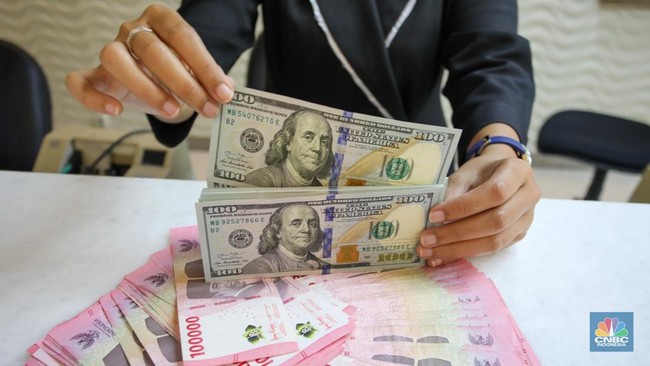
The rupiah opened flat against the US dollar on Wednesday (21 October 2026). Refinitiv data showed it opening at Rp17,980 per US dollar, unchanged from Tuesday’s close at the same level.
Meanwhile, the US dollar index (DXY), which measures the greenback against six major currencies, was up 0.10% at 101.803 at 9am Western Indonesian Time (WIB).
Markets are focused on Bank Indonesia’s (BI) interest-rate decision, due to be announced today following its Board of Governors Meeting, amid pressure on the rupiah.
In a poll of 13 financial institutions conducted by CNBC Indonesia Research, most respondents forecast that BI would raise its benchmark rate by 25 basis points to 6.00%. Ten expected an increase, while the other three forecast that the BI Rate would remain at 5.75%.
If implemented, the move would add to BI’s rate increases so far this year. The central bank previously raised rates by a cumulative 100 basis points in May and June 2026, from 4.75% to 5.75%, to support rupiah stability and head off inflationary pressures.
Expectations of a further increase reflect the rupiah’s earlier fall beyond Rp18,000 per US dollar, as well as growing domestic price pressures.
Statistics Indonesia (BPS) reported that annual inflation reached 3.28% in September 2026, up from 3.19% in August. The figure brought inflation closer to the upper limit of BI’s 3.5% target, although core inflation remained relatively contained at 2.84%.
The situation is also drawing market participants’ attention as they assess the direction of BI’s monetary policy. Juniman, an economist at Bank Maybank Indonesia, said the rupiah’s weakness and rising domestic inflation were the central bank’s two main considerations in setting interest rates.
He said energy and food price pressures also warranted close attention because they could raise production and transport costs. However, with inflation still within BI’s target range, Juniman said pressure on the rupiah posed the greater challenge for the central bank in making its decision this time.