
Rupiah Nears Rp18,000 Against US Dollar Amid Economic Pressures, Says Economist
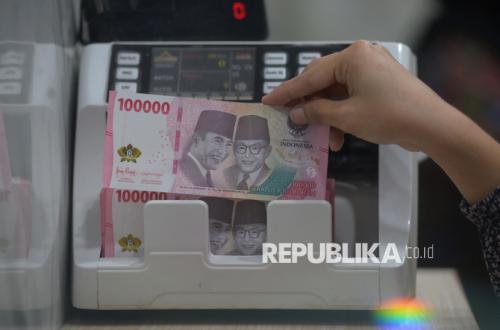
The rupiah’s weakening, which has now surpassed the Rp17,800 per US dollar level in the offshore market, is considered by Trimegah Securities Indonesia Chief Economist Fakhrul Fulvian as a result of bearing heavy economic pressures. Fakhrul, in his statement in Jakarta on Thursday, 28 May 2026, explained that under normal conditions, global energy price hikes would pressure inflation, fiscal pressures, domestic prices, and the exchange rate.
However, when domestic adjustments are made very cautiously to maintain social stability and purchasing power, the pressure ultimately shifts more to the rupiah.
‘Rupiah has become the main shock absorber. Inflation is contained, energy prices are kept in check, but the economic pressures do not disappear. The pressure moves to the exchange rate,’ Fakhrul explained.
He added that this is why the current rupiah depreciation appears much larger compared to other economic indicators.
He added that the current situation aligns with the Dornbusch Overshooting theory. When domestic prices are rigid while financial markets move quickly, the exchange rate moves far more extremely than fundamentals.
‘Inflation that should appear in many places is instead largely borne by the rupiah,’ he said.
He stated that this phenomenon often occurs in developing countries that choose to maintain short-term domestic price stability. The Indonesian government is currently facing a major dilemma between preserving public purchasing power and maintaining external stability.
Fakhrul assessed that the decision to hold back energy price adjustments is understandable from a social and political perspective. However, the consequence is that economic pressure becomes more concentrated in financial markets.
‘If domestic prices are kept rigid while global pressures continue to rise, the foreign exchange market will ultimately move the most extremely,’ he added.
He views Indonesia’s economic fundamentals as relatively strong compared to many other developing countries. In this regard, domestic inflation remains controlled, the banking sector is relatively healthy, and economic growth remains positive. However, Fakhrul warned that markets are not only looking at headline figures.
‘Markets are assessing whether Indonesia has a strong enough policy anchor to face a new global era that is much more volatile and inflationary,’ he said.
Furthermore, Fakhrul clarified that what is being tested now is not just economic fundamentals, but also credibility and policy consistency. He agreed that global factors are also pressuring the rupiah, from geopolitics and global trade fragmentation, US dollar strength, to high US Treasury yields.
However, he said domestic factors also play a role as markets perceive an imbalance between fiscal and monetary policies. He also noted that sudden policy communications amid poor market sentiment have further increased uncertainty.
‘When fiscal policy chooses to keep inflation low and price adjustments very limited, then Bank Indonesia and the rupiah must work much harder,’ Fakhrul said.
The rupiah weakened past the Rp17,800 per US dollar level in the offshore market during the domestic market holiday for Eid al-Adha 1447 Hijriyah on Wednesday, 27 May 2026, and Thursday, 28 May 2026. According to global forex spot trading, the rupiah rate stood at Rp17,873.50 per US dollar on Thursday, 28 May at 12.21 WIB.
Source: jawawa.id (https://jawawa.id/newsitem/rupiah-nears-rp18-000-against-us-dollar-amid-economic-pressures-says-economist-1780022776)
Originally published by Republika (https://ekonomi.republika.co.id/berita/tfqlio409/rupiah-mendekati-rp18000-per-dolar-as-ekonom-akibat-menanggung-banyak-tekanan-ekonomi), translated from Indonesian