
Rupiah Hits Worst Level Ever, Here's How BI, Purbaya and the Palace Respond
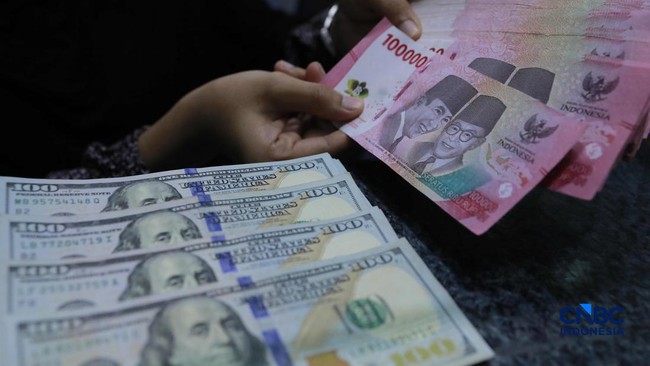
Jakarta, CNBC Indonesia - The rupiah exchange rate closed weaker against the United States (US) dollar in trading yesterday (4/6/2026). Citing Refinitiv data, the rupiah closed down 0.45% at the level of Rp18,020/US$. Consequently, the rupiah once again recorded its worst level in history. In the midst of this pressure on the rupiah, Bank Indonesia (BI), Finance Minister Purbaya Yudhi Sadewa and Minister of State Secretary Prasetyo Hadi spoke up to explain the condition of the Garuda currency's exchange rate. BI Deputy Governor Destry Damayanti said the exchange rate weakening is still influenced by Middle East geopolitical tensions which have escalated again and hampered peace prospects, thereby keeping oil prices high and increasing global inflation risks and capital outflows from developing countries. "In addition, domestic (dollar) demand is still quite large in line with dividend repatriation patterns and external debt payments," said Destry, in a short message to CNBC Indonesia, Thursday (4/6/2026). She also emphasised that Bank Indonesia will continue to be present in the market and increase the intensity of its intervention to ensure the market mechanism runs well and the stability of the rupiah exchange rate is maintained in accordance with its fundamentals. In addition, BI continues to strengthen the interest rate structure of pro-market monetary instruments to keep attracting capital inflows into domestic asset instruments. Destry explained that continuous intervention will be carried out consistently through Non-Deliverable Forward (NDF) transactions in the offshore market, spot transactions and Domestic Non-Deliverable Forward (DNDF) in the domestic market, accompanied by the purchase of government bonds in the secondary market. Finance Minister Purbaya Yudhi Sadewa revealed that the pressure on the rupiah exchange rate against the US dollar, which has now breached the level of Rp 18,000/US$, is still within the macro assumption calculations of the 2026 State Budget (APBN). Therefore, he ensured that the APBN condition is not significantly affected by the effect of the rupiah’s weakening against the dollar. Including the payment burden for debt interest coupons denominated in US dollars. “The coupons are constant. It’s just that when the rupiah weakens, yes, the payments increase in rupiah terms. But, here’s the thing, this is still within our calculation range that I mentioned earlier,” said Purbaya when met in the area of the DPR Building, Jakarta, Thursday (4/6/2026). Minister of State Secretary Prasetyo Hadi requested that relevant economic officials continue to coordinate to carry out monitoring. “Regarding the Rupiah issue, we in the government, in this case the Ministry of Finance, then Bank Indonesia, then also the Financial Services Authority (OJK) continue to coordinate intensively to continuously monitor and then take steps,” said Prasetyo Hadi, at the Presidential Palace Complex, Thursday (4/6/2026). He emphasised that Indonesia’s economic fundamentals remain strong. “But what is certain is we can say that we must be confident that indeed our economic fundamentals, as reflected by economic growth, then by inflation that remains under control, God willing, we actually have quite strong economic fundamentals,” he said.