
Rupiah Hits Record Low, Agricultural Seed Breeders Issue Warning
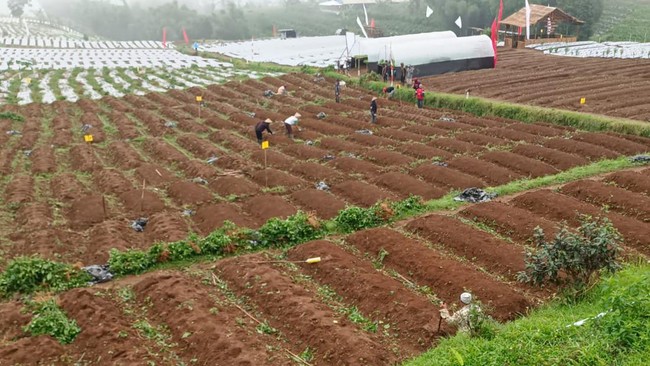
The strengthening of the US Dollar, which has surpassed Rp17,600, is beginning to pressure the national plantation crop seed industry. This indicates that the weakening of the Rupiah is also impacting industries within rural areas.
Business players report that the rise in the exchange rate has a direct impact on field production costs. As of Monday (18/05/202lar), the Rupiah closed in the red, weakening by 1.03% to the level of Rp17,640/US.ThislevelseestheRupiahbreakingthroughthepsychologicalbarrieraboveRp17, 000/US, marking its weakest closing position in history.
The Chairman of the Indonesian Plantation Crop Seed Breeders Association, Badaruddin Sabang Puang, stated that the strengthening of the US Dollar is causing the prices of various production necessities to rise, ranging from fertilisers to agricultural equipment.
“The increase in the US Dollar value is certain to affect the rising costs of seed production due to the increased prices of production factors such as fertilisers, pesticides, polybags, labour, as well as other agricultural tools and materials,” Badaruddin told CNBC Indonesia on Monday.
Preparing for Seed Price Hikes
Cost pressures are being felt by MSME breeders who serve as the primary suppliers for national plantation seeds. In response to these conditions, business players are seeking ways to curb expenditure while maintaining production quality. One encouraged step is to utilise local resources to reduce dependence on imported raw materials. The use of organic fertilisers and more efficient pest control methods is being considered as a solution.
“In conditions like this, breeders are expected to implement savings on operational units that can be reduced without affecting the quality or quantity of production,” he said.
The agricultural industry’s dependence on imported fertilisers remains a major challenge during periods of Rupiah weakness, as almost all raw materials for chemical fertilisers are sourced from abroad. “Almost all raw materials for chemical or inorganic fertilisers are imported. An alternative to reduce this dependency is to use organic fertilisers or compost,” he added.
On the other hand, the weakening of the Rupiah has the potential to trigger an increase in plantation seed prices if the exchange rate remains high in the coming months. “If the Dollar continues to rise, it is very possible that an evaluation or review of the prices of plantation seeds ready for distribution will be conducted,” said Badaruddin.