
Rupiah Hits All-Time Low: The Primary Drivers Behind the Decline
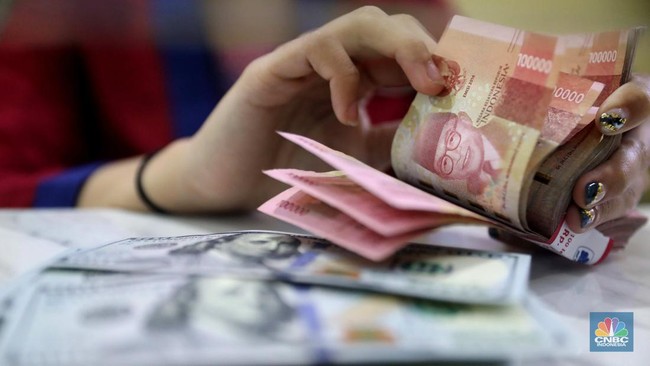
The Rupiah exchange rate is under heavy pressure against the US Dollar, with the currency continuing its weakening trend and moving further away from its psychological levels. According to Refinitiv, during trading on Monday (18/05/2026), the Rupiah even breached the level of Rp17,660/US$, representing a depreciation of approximately 1.15%. This position marks an all-time intraday low for the Rupiah in the spot market.
Pressure on the Rupiah has been evident recently. Global uncertainty, strong demand for the US Dollar, domestic financial market pressure, and concerns regarding foreign capital outflows have made it difficult for the currency to recover. This pressure is not driven by a single factor; the market is pricing in several simultaneous risks, ranging from changes in the MSCI index composition and the quality of economic growth to investor perceptions regarding the direction of domestic fiscal policy.
Potential Reduction of Indonesia’s Weight in MSCI
One of the primary pressures on the Rupiah stems from market concerns regarding changes in the MSCI index composition. In the May 2026 review, MSCI officially removed six Indonesian stocks from the Global Standard Index. This removal is a significant concern for market participants as it could shrink Indonesia’s weight in the emerging market index. According to DBS economist Radhika Rao, Indonesia’s weight in the emerging market index is expected to drop to approximately 0.5-0.6%, down from nearly 0.8%. “This lower proportion for Indonesia will encourage investors to rebalance their portfolios, potentially triggering additional moderate foreign outflows,” wrote Radhika Rao in a research report.
Economic Growth Not Strong Enough to Support Rupiah
While Indonesia’s Q1-2026 economic growth data appeared strong, these solid figures have not been sufficient to support the Rupiah. The market perceives that the growth momentum is largely driven by government spending and household consumption, while contributions from investment and trade have not been strong enough to build greater confidence in economic prospects. “The strong Q1-2026 growth report also failed to invigorate the Rupiah, because the growth driver came from higher government spending and consumption, rather than investment or trade,” Radhika noted.
Fiscal Credibilityeyond financial market factors, the Rupiah’s weakness is also linked to investor perceptions of fiscal policy. The market is closely monitoring the direction of government spending, the quality of budget utilisation, and the ability to maintain a credible deficit. In an analysis by Ezaridho Ibnutama, the Rupiah’s depreciation cannot be viewed solely as a monetary issue; the exchange rate also reflects the market’s assessment of the government’s fiscal behaviour. “In the long term, the exchange rate is a verdict on the government’s fiscal behaviour,” wrote Ezaridho. This is critical because as the Rupiah weakens, US Dollar-denominated obligations increase, inflating the real cost of debt servicing.
US-Iran Conflict
Pressure on the Rupiah also stems from geopolitical uncertainty in the Middle East, particularly regarding the unresolved negotiations between the US and Iran. This situation has caused energy prices, specifically crude oil, to remain volatile with an upward trend. During intraday trading this morning, Brent crude rose 1.9% to US$111.34 per barrel, while West Texas Intermediate (WTI) rose 2.3% to US$107.84 per barrel. High oil prices serve as a negative sentiment as they can increase pressure on inflation, energy subsidies, the trade balance, and foreign exchange requirements.