
Rupiah Falls to Record Low of Rp 18,000
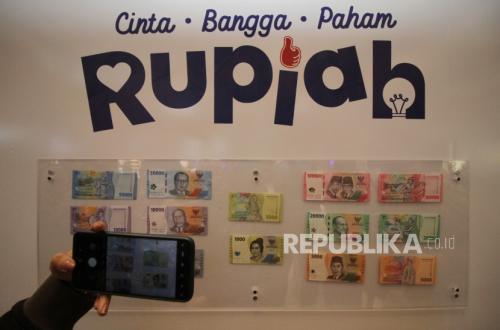
REPUBLIKA.CO.ID, JAKARTA – The Rupiah’s exchange rate against the US dollar continues to weaken. On Thursday (4 June 2026), the Rupiah breached the Rp 18,000 level per US dollar for the first time, marking its weakest position in history.
According to Bloomberg, the Rupiah opened lower by 37 points to Rp 18,003 per US dollar. As of approximately 09.15 WIB on Thursday, the Rupiah had corrected further, reaching Rp 18,014.5 per US dollar. Meanwhile, the US dollar index also weakened by approximately 0.09 points to 99.44.
Bank Indonesia (BI) continues to make efforts to intervene in the market to stabilise the Rupiah. Various policies are also being implemented. “Bank Indonesia continues to be present in the market by optimising all policy instruments to ensure that market mechanisms function properly and maintain adequate foreign exchange liquidity to support financial market stability,” said Head of the BI Communications Department, Ramdan Denny Prakoso, in an official statement on Wednesday (3 June 2026).
Denny explained that one of BI’s strategic policies is to implement a threshold for US dollar purchases. In April 2026, BI lowered the limit for US dollar purchases without underlying transactions from US$100,000 per person per month to US$50,000 per person per month. This policy was then tightened further. Starting in June 2026, the purchase limit was reduced again to US$25,000 per person per month.
“Starting on 2 June 2026, Bank Indonesia has implemented a cash purchase threshold for foreign exchange against the Rupiah without underlying transactions of US$25,000 per transaction per month,” he explained.
BI is also continuing to encourage the use of local currency in bilateral cooperation through the Local Currency Transaction (LCT) scheme as an effort to reduce dependence on the US dollar and mitigate the risk of exchange rate volatility. This cooperation has been established with China, Japan, Malaysia, Thailand, South Korea, and the United Arab Emirates (UAE).
“Bank Indonesia believes that Rupiah exchange rate stability requires synergy from all stakeholders. To that end, Bank Indonesia continues to strengthen coordination with the government, the Financial Services Authority (OJK), banks, the business world, and market participants to ensure that market mechanisms function properly and strengthen the external resilience of the national economy,” he said.