
Rupiah Falls to IDR 18,015: BI Expected to Intervene Aggressively
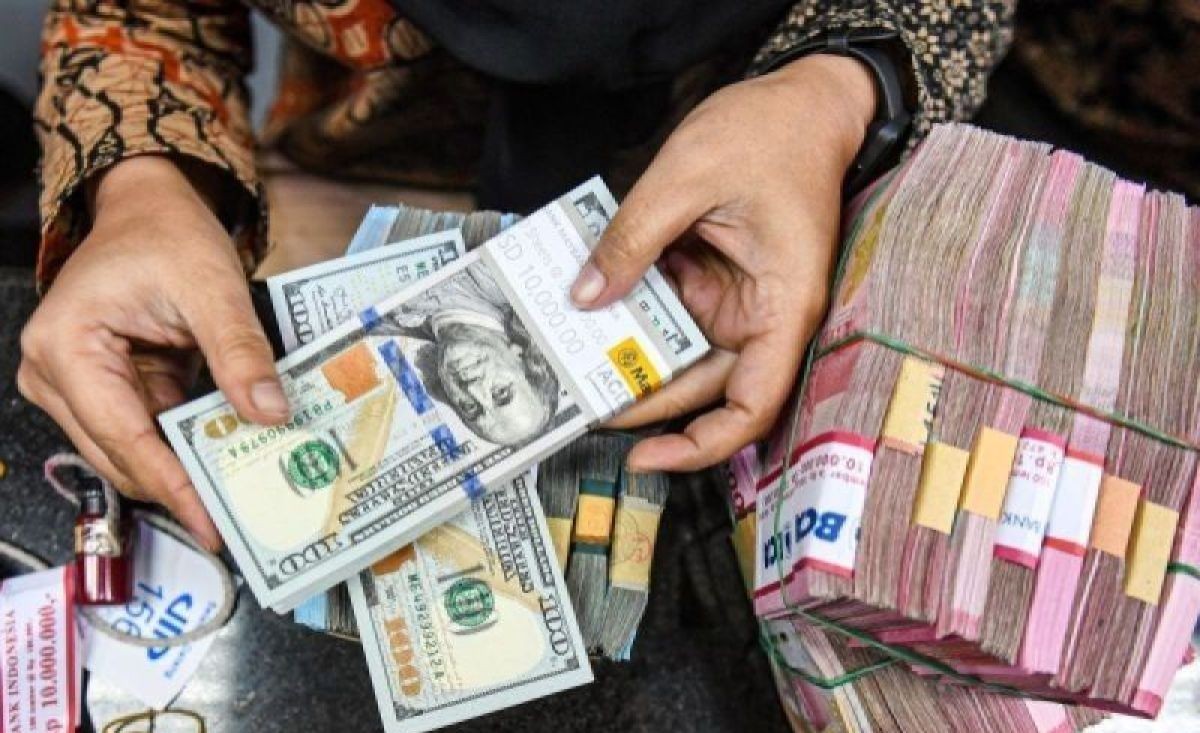
The exchange rate of the Rupiah against the US dollar experienced significant pressure in trading on Thursday morning, June 4, 2026. Based on market data, the Rupiah weakened by 0.27% to reach IDR 18,015 per US dollar, a level that marks the crossing of a new psychological threshold at IDR 18,000.
Currency analyst from Doo Financial Futures, Lukman Leong, stated that this weakening is the result of massive external pressures and domestic conditions that have not yet fully supported the strengthening of the domestic currency.
Although global factors such as geopolitical tensions in the Middle East and solid US economic data (ISM services sector and employment) are the main triggers for the strengthening of the dollar, conditions at home are also a concern. Lukman assessed that domestic market sentiment is currently not conducive enough to provide strong resistance to the onslaught of the US dollar.
However, further weakening is predicted to be contained by concrete action from the monetary authority. Bank Indonesia (BI) is expected not to remain silent in the face of the exchange rate touching a new psychological level.
Lukman Leong added that BI’s stabilization measures are the key to containing volatility. “With still poor domestic sentiment, but approaching a new psychological level, Bank Indonesia is likely to intervene aggressively,” he said.
According to him, the Rupiah is predicted to still move in a fluctuating manner today. Market participants need to monitor the range of movement in the range of IDR 17,900 to IDR 18,050 per US dollar. BI’s presence in the market is expected to be able to dampen panic and maintain investor confidence in Rupiah-based assets.
This condition confirms the importance of synergy between fiscal and monetary policies in facing increasing global uncertainty, while ensuring that the national economic fundamentals remain maintained amid exchange rate pressures. (Ant/E-3)